
The short answer
Titleist sold AP1 and AP2 side by side in each generation, and its spec pages give each family its own loft row. Our catalog holds ten of those pages: AP1 and AP2 in the 2008, 710, 712, 716 and 718 generations. Side by side:
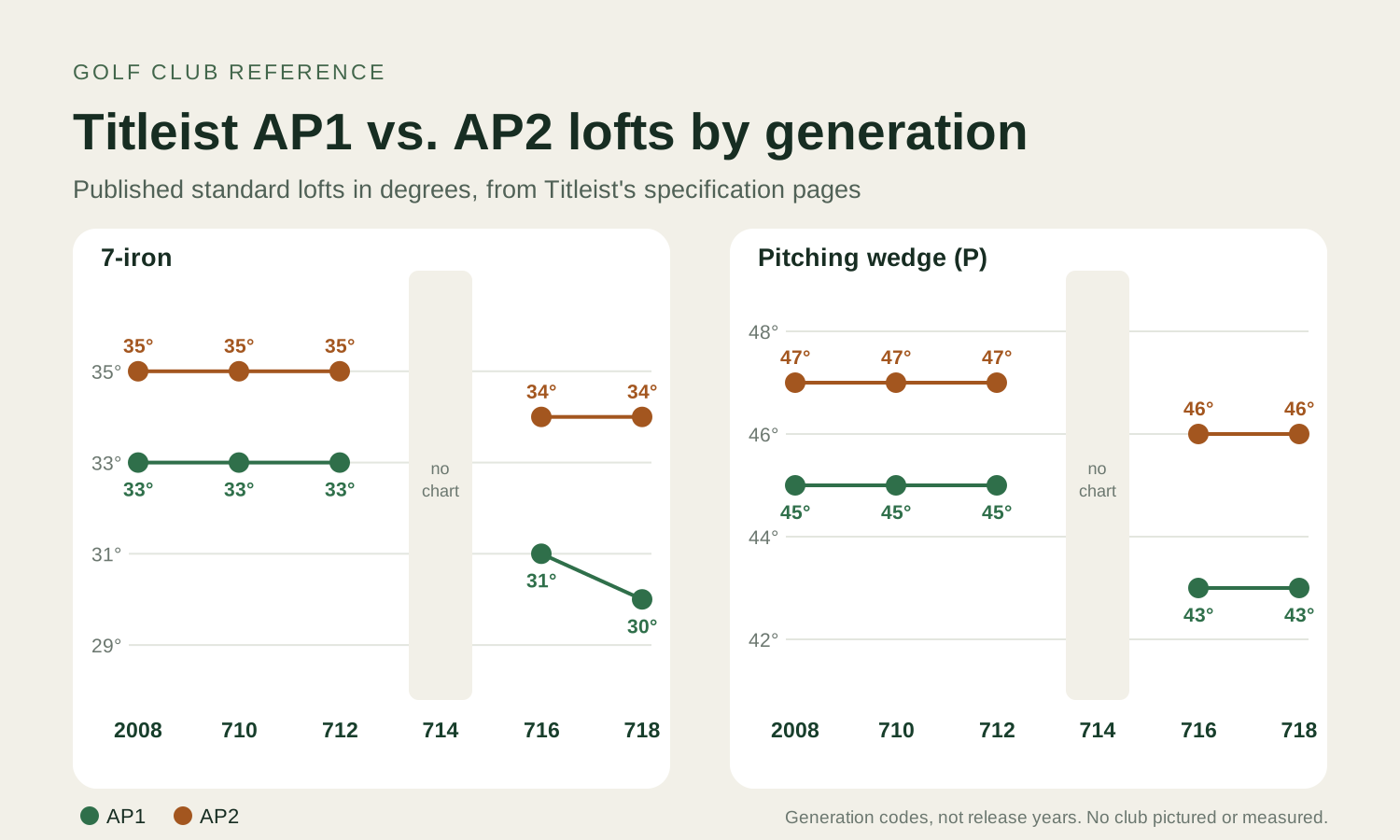
- The early AP1 chart (33° 7-iron, 45° P) ran unchanged through 2008, 710 and 712. It got 2° stronger at the 7-iron in 716 (31°) and another degree stronger in 718 (30°).
- AP2 changed once. Its 35° 7-iron and 47° P became 34° and 46° in 716, and the 718 page prints the same table as 716.
- The lie and length rows are the same in all ten charts. Only loft and the wedge rows changed.
A listing that says “Titleist AP2 irons” with no generation could match either of two loft charts, and an AP1 listing any of three, so ask for a photo of the hosel.
AP1 lofts by generation
Each column below comes from the catalog record for that generation, transcribed from Titleist's own specification page. A dash means the page does not list that club.
| Club | 2008 | 710 | 712 | 716 | 718 |
|---|---|---|---|---|---|
| 3-iron | 20° | 20° | 20° | 19° | – |
| 4-iron | 23° | 23° | 23° | 22° | 21° |
| 5-iron | 26° | 26° | 26° | 25° | 24° |
| 6-iron | 29° | 29° | 29° | 28° | 27° |
| 7-iron | 33° | 33° | 33° | 31° | 30° |
| 8-iron | 37° | 37° | 37° | 35° | 34° |
| 9-iron | 41° | 41° | 41° | 39° | 38° |
| P (pitching wedge) | 45° | 45° | 45° | 43° | 43° |
| W | 50° | 50° | 50° | 47° | 48° |
| W2 | – | – | – | 52° | 53° |
The 2008, 710 and 712 columns match club for club, from a 20° 3-iron to a 50° W. A 712 AP1 7-iron and a 2008 AP1 7-iron carry the same factory loft, so the number won't separate them.
The 716 AP1 is where the chart moves: 19° to 39° from the 3-iron to the 9-iron, a 43° P, and two wedges, W at 47° and W2 at 52°. Titleist marks the 3-iron with an asterisk, so don't assume a retail 716 set included one. The 718 AP1 keeps the 43° P, takes the 7-iron to 30°, and moves the wedges to 48° and 53°. Titleist's 718 note starts AP1 at the 4-iron.
The AP1 P loft went from 45° to 43°, which moves the gap to the next wedge in the bag. The wedge gap planner can load any of these charts and lay out wedges below that P.
AP2 specs by generation
| Club | 2008 | 710 | 712 | 716 | 718 |
|---|---|---|---|---|---|
| 3-iron | 21° | 21° | 21° | 21° | 21° |
| 4-iron | 24° | 24° | 24° | 24° | 24° |
| 5-iron | 27° | 27° | 27° | 27° | 27° |
| 6-iron | 31° | 31° | 31° | 30° | 30° |
| 7-iron | 35° | 35° | 35° | 34° | 34° |
| 8-iron | 39° | 39° | 39° | 38° | 38° |
| 9-iron | 43° | 43° | 43° | 42° | 42° |
| P (pitching wedge) | 47° | 47° | 47° | 46° | 46° |
| W | 51° | 51° | 51° | 50° | 50° |
AP2 has only two loft charts across these five pages. The 2008, 710 and 712 pages list a 35° 7-iron, 47° P and 51° W. The 716 and 718 pages list 30° at the 6-iron, 34° at the 7-iron, 46° at P and 50° at W. The 3-, 4- and 5-irons stayed at 21°, 24° and 27° throughout.
AP2 offset is a separate question, and Titleist printed it in different units on different pages. Our AP2 offset article sorts that out.
AP1 vs. AP2 in the same generation
| Generation | AP1 7-iron | AP2 7-iron | 7-iron gap | P gap |
|---|---|---|---|---|
| 2008 | 33° | 35° | 2° | 2° |
| 710 | 33° | 35° | 2° | 2° |
| 712 | 33° | 35° | 2° | 2° |
| 716 | 31° | 34° | 3° | 3° |
| 718 | 30° | 34° | 4° | 3° |
The gap widened because AP1 got stronger faster. In the first three charts the two families sit 2° apart from the 6-iron to P, and 1° apart at the 3- to 5-iron and at W. In 716 the 7-iron gap is 3°, and in 718 it is 4°, while the P gap stays at 3° in both.
That matters for combo sets, where long irons from one family meet short irons from the other. Where the heads meet, the step can be much smaller or much larger than the rest of the set. Our 718 AP3/AP2 combo-set article works through that check for the AP3, and the loft gap checker shows the steps in any single chart.
The 718 AP2 table also turns up in the next generation: Titleist's 720 T100 page prints the same lofts, lies and lengths. Our T100, T200 and T300 lofts by generation article follows the T-Series charts from there.
Lie and length never changed
Every one of the ten pages prints the same lie and length for a given club. Where two pages both list a club, the numbers match.
| Club | Lie | Length (in) |
|---|---|---|
| 3-iron | 60° | 39 |
| 4-iron | 61° | 38.5 |
| 5-iron | 62° | 38 |
| 6-iron | 62.5° | 37.5 |
| 7-iron | 63° | 37 |
| 8-iron | 63.5° | 36.5 |
| 9-iron | 64° | 36 |
| P (pitching wedge) | 64° | 35.75 |
| W | 64° | 35.5 |
| W2 | 64° | 35.5 |
A 37-inch 7-iron at 63° fits every generation on paper, so a measured length that matches the chart doesn't date the set. A length well off 37 inches suggests a custom build or a cut or extended shaft. Our guide to measuring club length explains how to get a number you can compare.
Where the 714 fits
Titleist's generation codes run 2008, 710, 712, 714, 716 and 718, and the 714 AP1 and AP2 are missing from our tables. The current 714 pages on titleist.com carry no specification table, and the Internet Archive captures of both 714 pages that we checked have none either. We have no factory chart for the 714 and don't fill the gap by guessing between 712 and 716.
If you own a 714 set, the head will say 714 on the hosel. Measure it or ask Titleist for the build specification rather than using either neighbor's chart.
Find the generation on the head
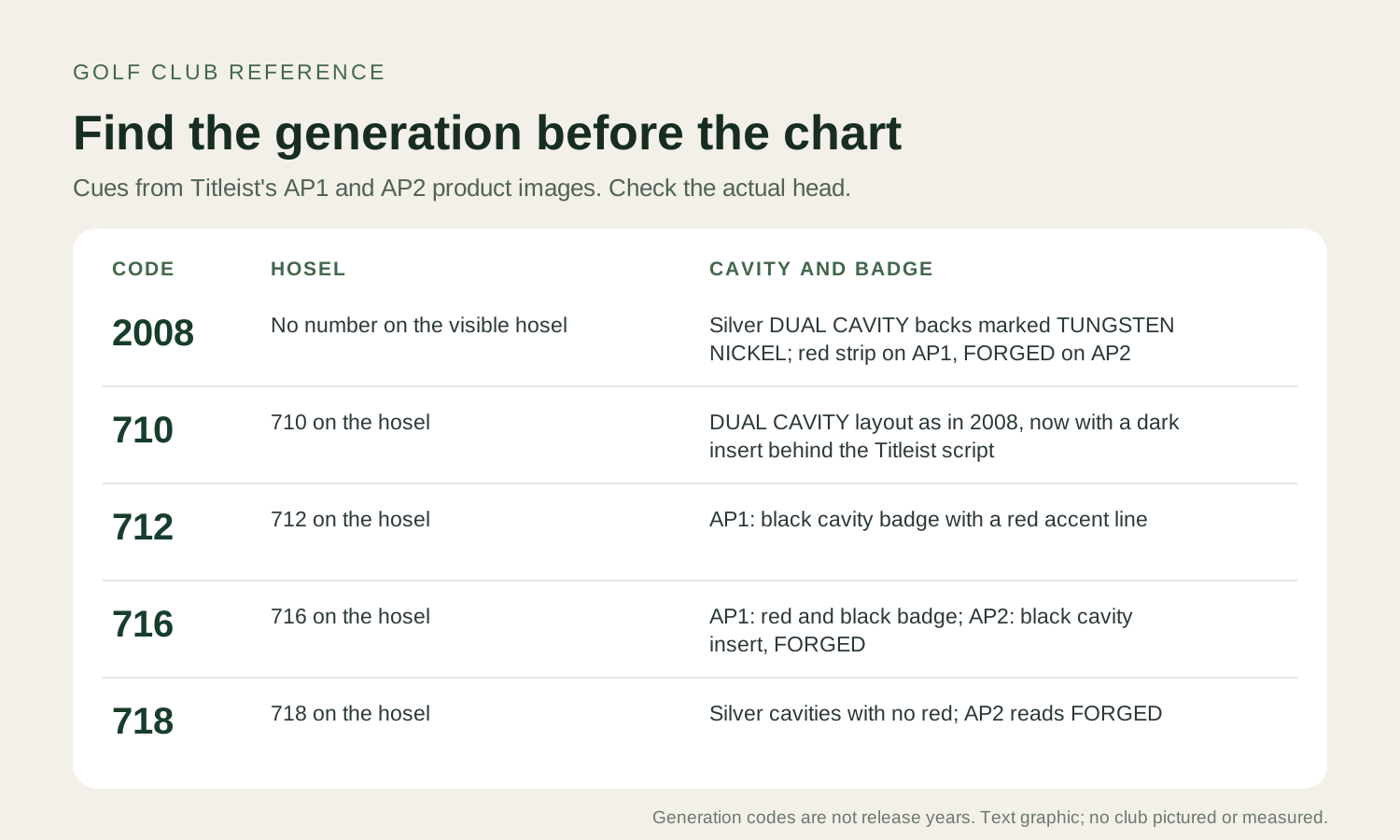
Titleist's product images for the 710, 712, 716 and 718 generations show the code stamped on the hosel. The 2008 images show no number on the visible side of the hosel. That is the quickest check: photograph the hosel and the back of the 7-iron and compare them with the model pages.
- 2008: silver dual-cavity backs reading DUAL CAVITY and TUNGSTEN NICKEL. The AP1 has a red strip in the cavity; the AP2 reads FORGED.
- 710: the same dual-cavity layout with a dark insert behind the Titleist script, and 710 on the hosel.
- 712: the AP1 has a black cavity badge with a red accent line and 712 on the hosel.
- 716: a red and black badge on the AP1 and a black insert on the forged AP2, with 716 on the hosel.
- 718: silver cavities with no red, FORGED on the AP2, and 718 on the hosel.
A serial number is a separate thing from the generation code. Our article on older Titleist serial numbers covers what Titleist says a serial inquiry can and can't tell you. If the badge is worn, the model year finder lists every Titleist iron chart we hold.
Checking a used set
- Read the family (AP1 or AP2) from the badge and the generation from the hosel. Check more than one club; mixed sets exist.
- Open the matching model page and note the loft for each club in the set. Compare any two charts with the iron comparison tool.
- Note which wedges are present. W and W2 on an AP1 716 or 718 are separate clubs with separate lofts.
- Check the installed shaft and grip from their labels; either may have been replaced.
- Have loft and lie checked if the numbers matter to you, and keep your measurements next to the factory figures. The used-iron checklist covers condition and alteration questions.
For how these lofts compare with older and newer sets from other brands, see the 7-iron loft study. Every Titleist model we cover is listed on the Titleist brand page.
Sources and limits
Figures come from Titleist's specification pages for each generation, transcribed into our catalog between September 27 and October 4, 2026: AP1 2008, 710, 712, 716, 718; AP2 2008, 710, 712, 716, 718; and the 718 AP3. The tables on this page are generated from those records, so they can't drift from the model pages. The 714 check used titleist.com and Internet Archive captures of the 714 AP1 and AP2 pages, reviewed October 9, 2026.
Generation codes are Titleist's labels, not release years or manufacture dates, and this article assigns no year to any set. The head cues come from Titleist's product images on each model page. No clubs were inspected, measured or hit for this article, and nothing here predicts distance or says which set suits a particular golfer.