Make sense of your specifications.
Practical explanations for reading an iron chart, checking a used set and knowing when you need an actual measurement.

Understand the published numbers, then check the clubs you actually play.
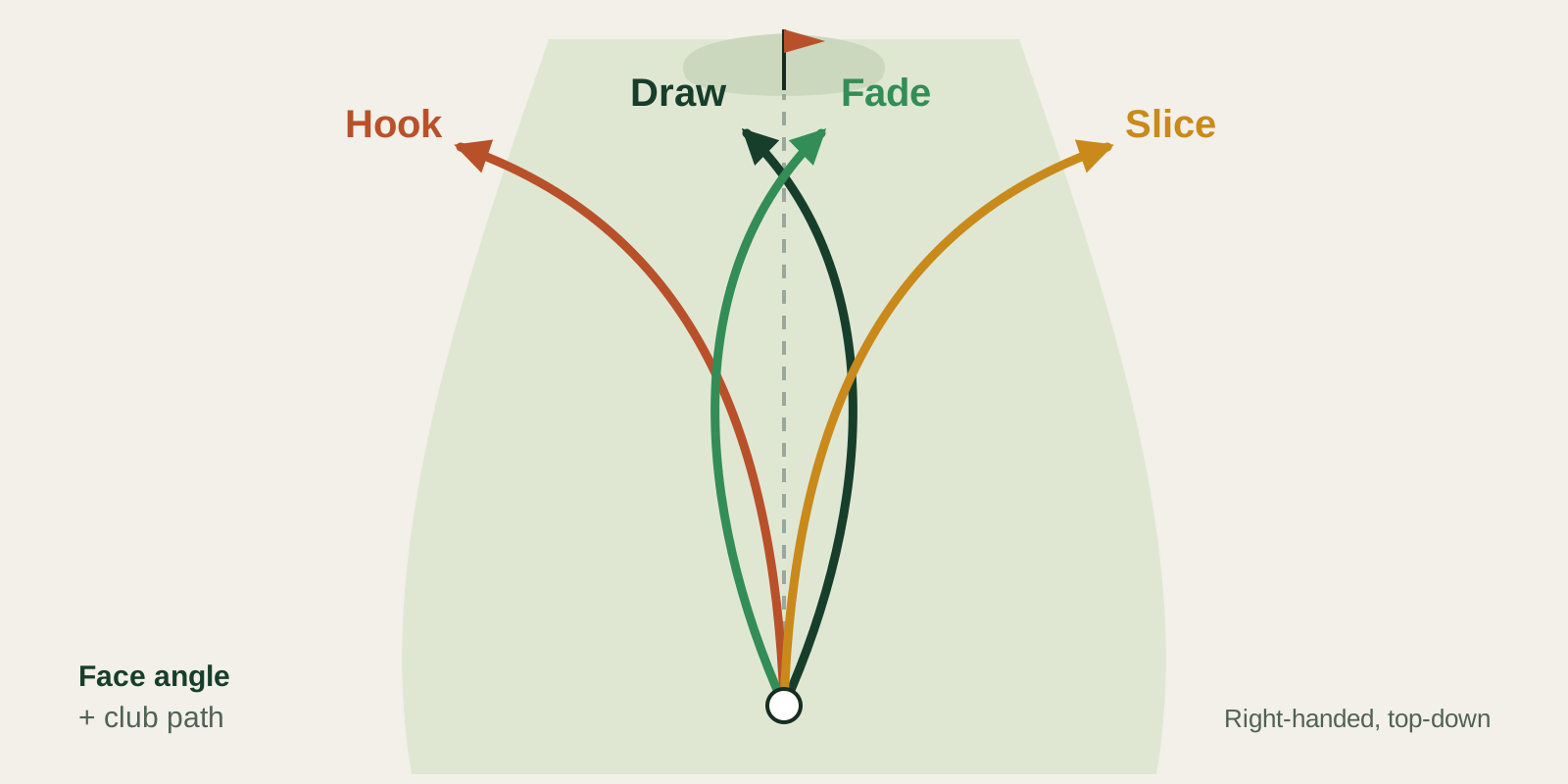
Ball flight laws: draw, fade, hook, slice and cut
See how face angle and club path create a draw, fade, hook, slice or cut, with modeled trajectories, D-plane diagrams and an interactive face-and-path explorer.
Read the guide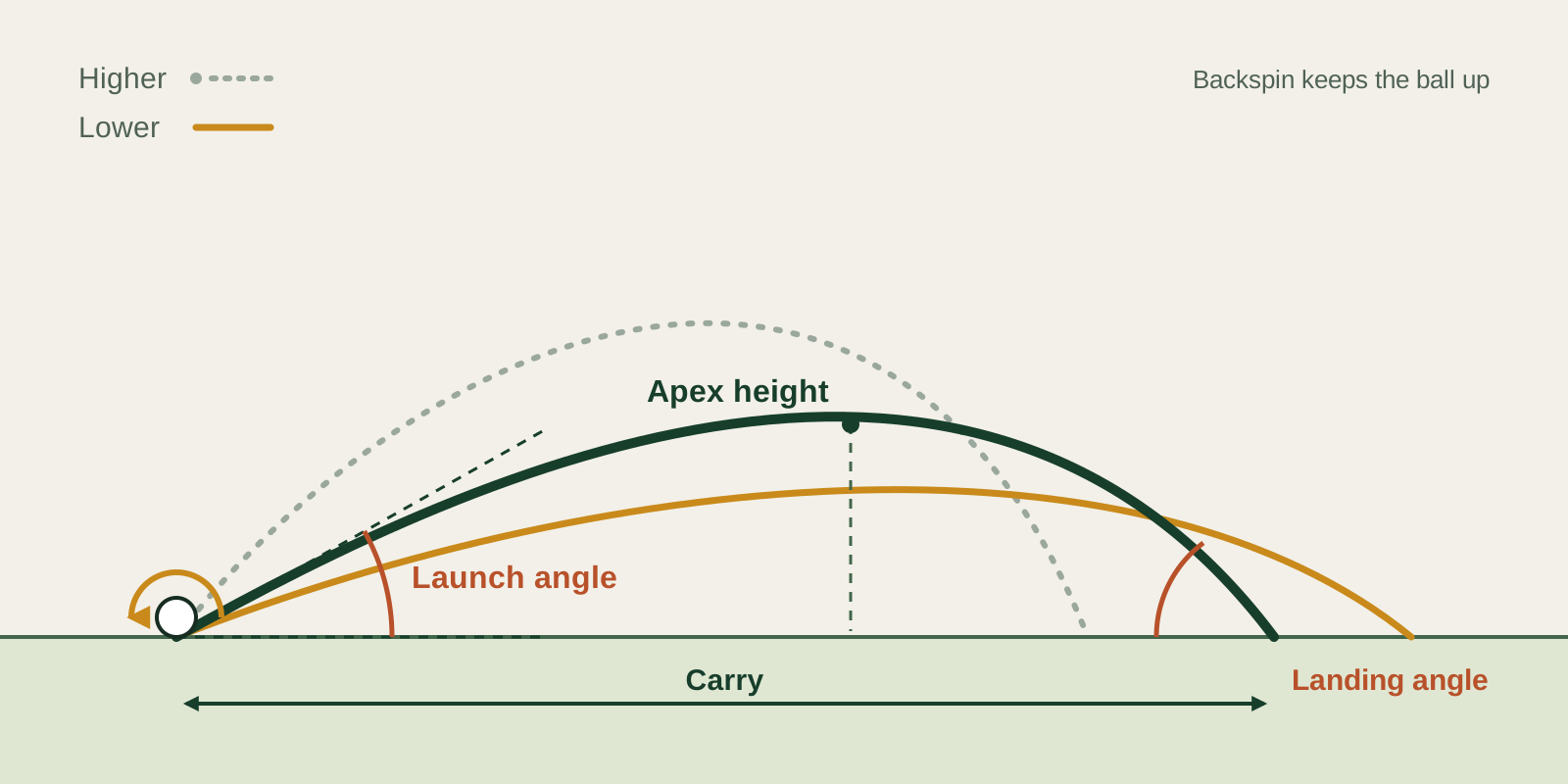
Launch angle, spin and ball flight height
See how launch angle, backspin and wind shape a golf shot's height, carry and landing angle, with modeled trajectories and an interactive launch explorer.
Read the guide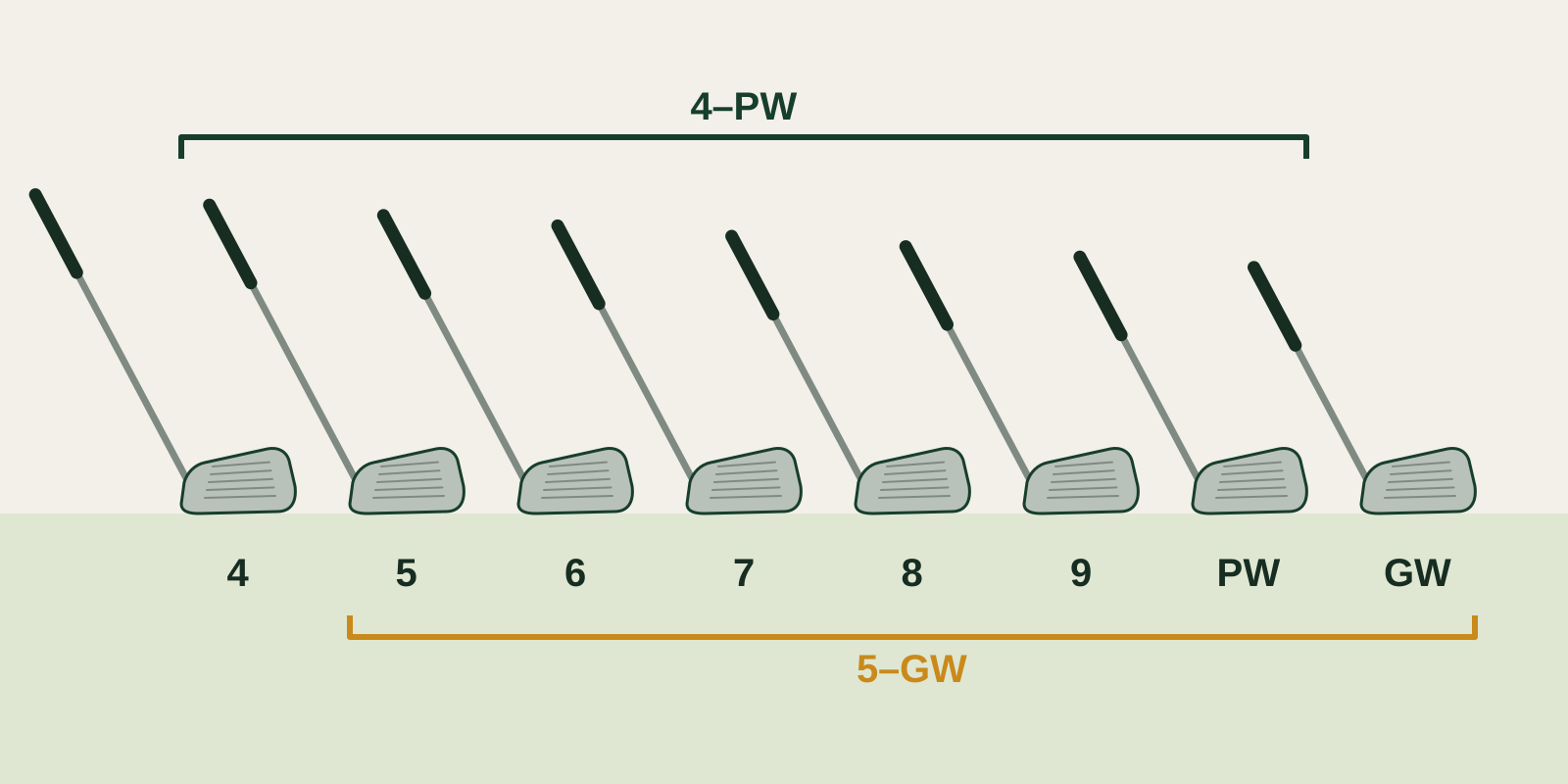
What does an iron set include?
Read 4–PW and 5–GW listings, separate combo-set hybrids from irons, and inventory the actual clubs in a used set.
Read the guide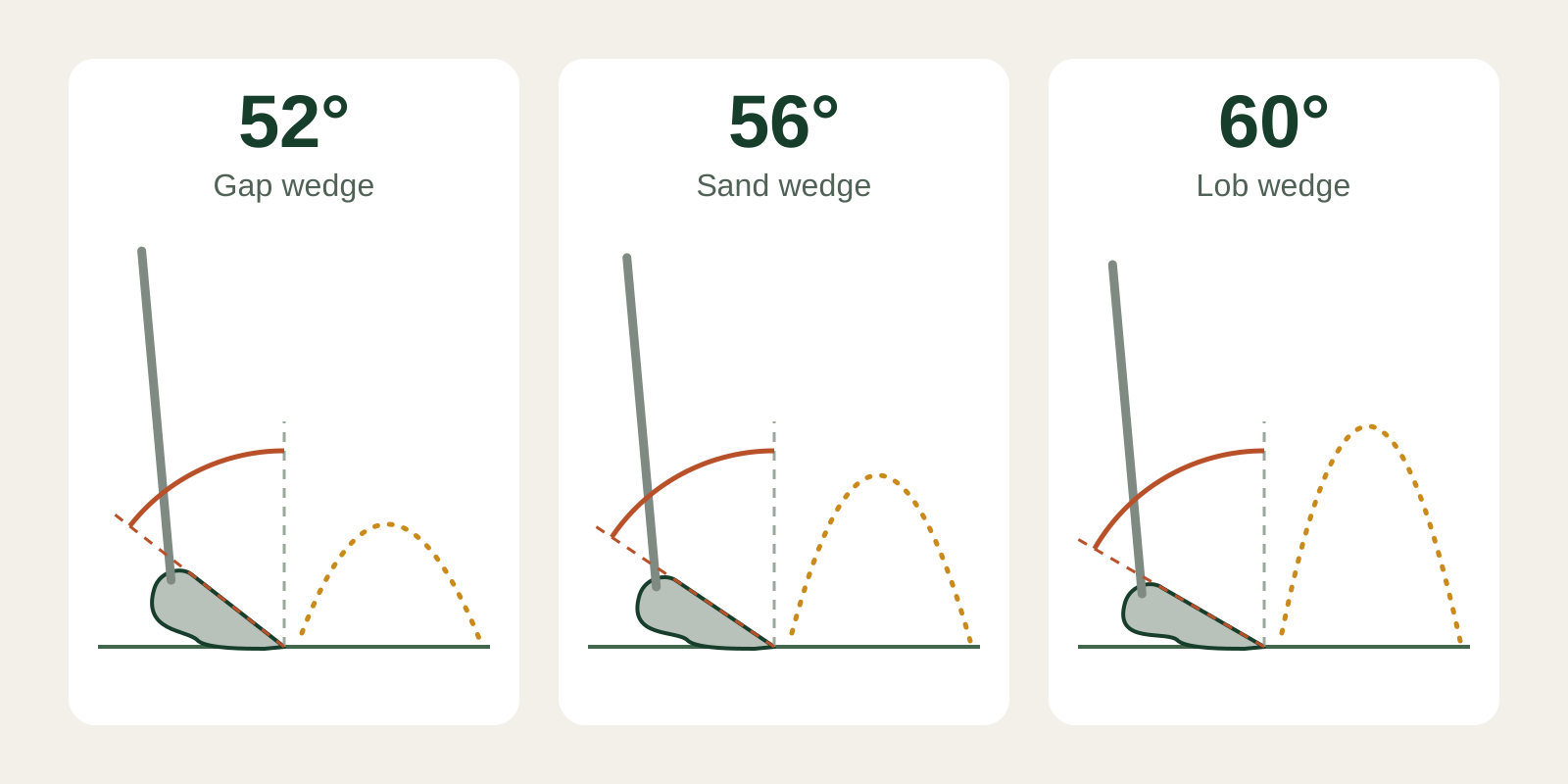
Wedge Lofts: Pitching, Gap, Sand and Lob Wedge Degrees
Pitching, gap, sand and lob wedge lofts from factory charts, by era, plus what 52°, 56° and 60° wedges are for around the green and in bunkers.
Read the guide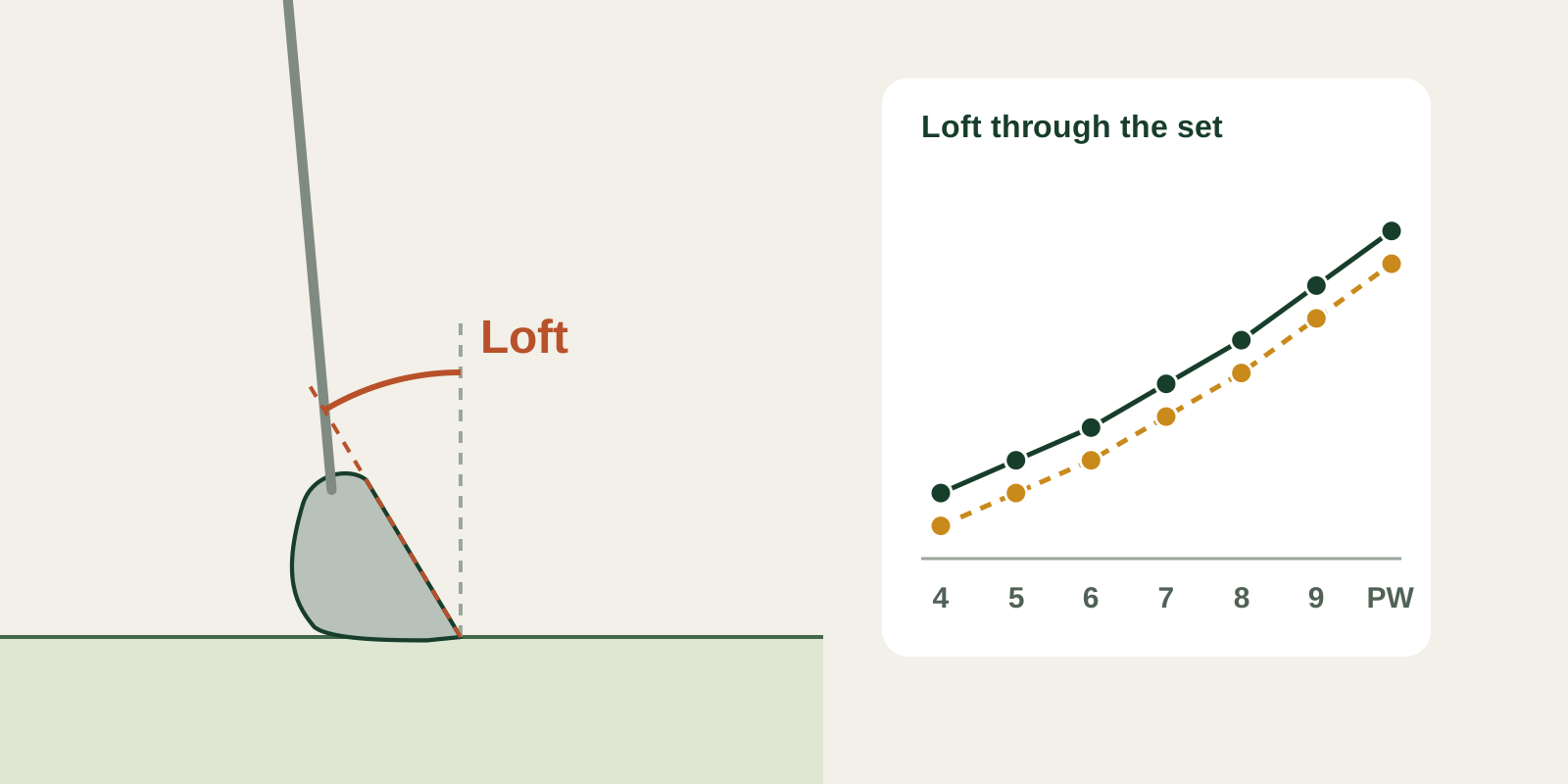
Golf Club Loft Chart: Degrees for Every Club
Median, most common and range of factory loft for every iron, wedge, driver, fairway wood and hybrid in manufacturer charts, and how iron lofts changed by era.
Read the guide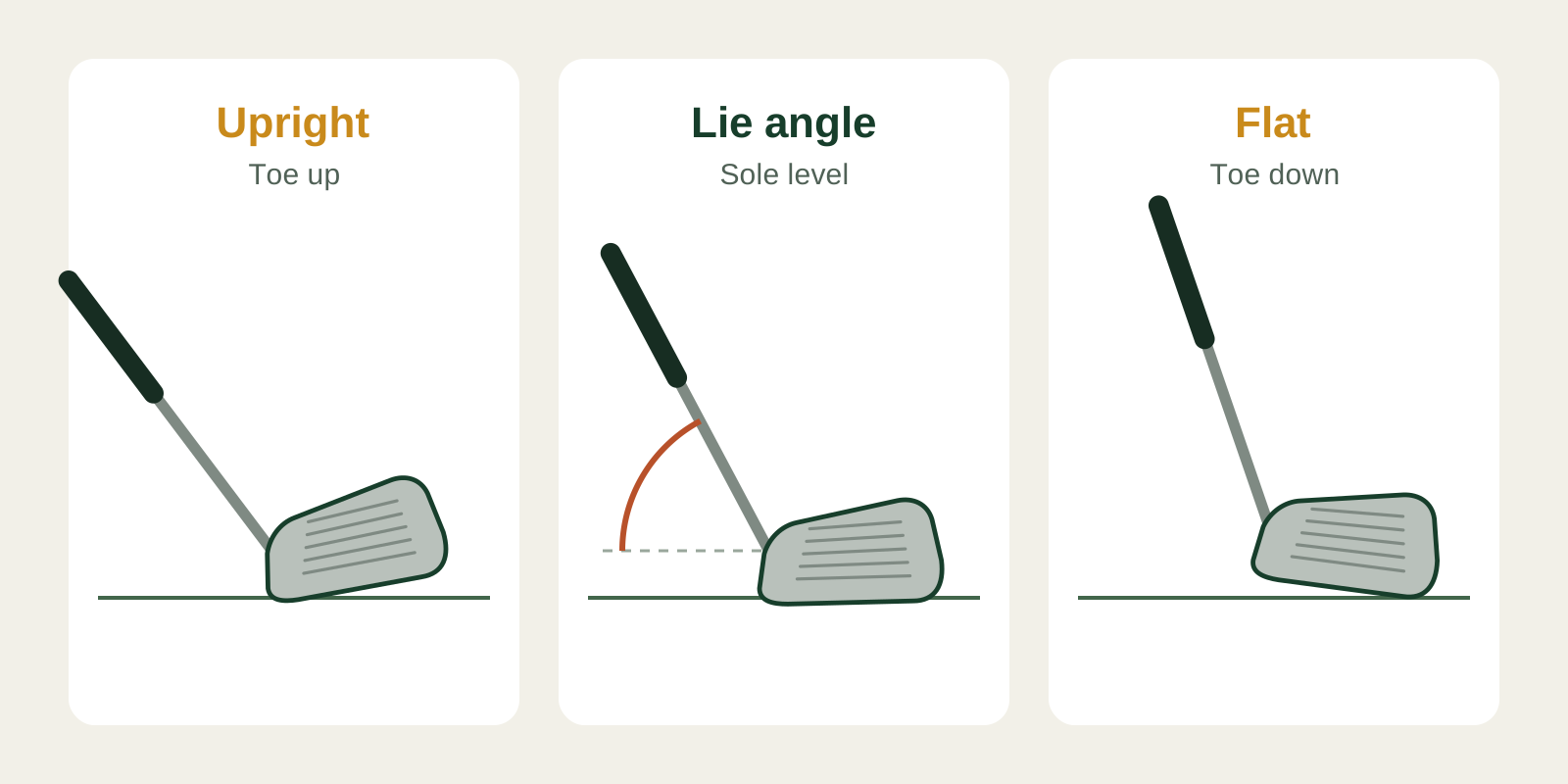
Understanding lie angle
Learn the difference between upright and flat, and why a factory lie angle is a reference rather than a fitting verdict.
Read the guide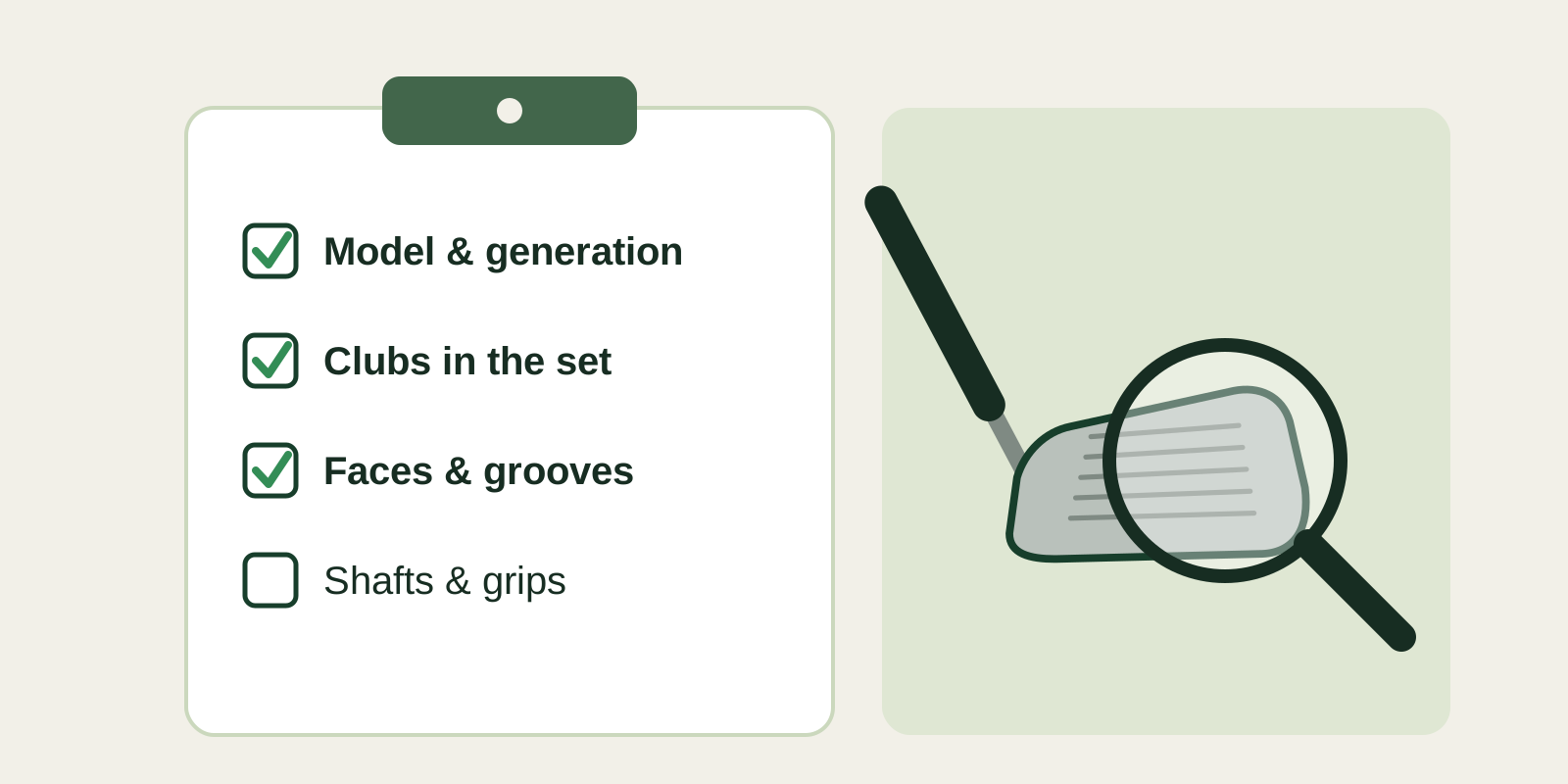
A practical checklist for used irons
Confirm the generation, inspect the actual set and ask the questions a factory specification table cannot answer.
Read the guide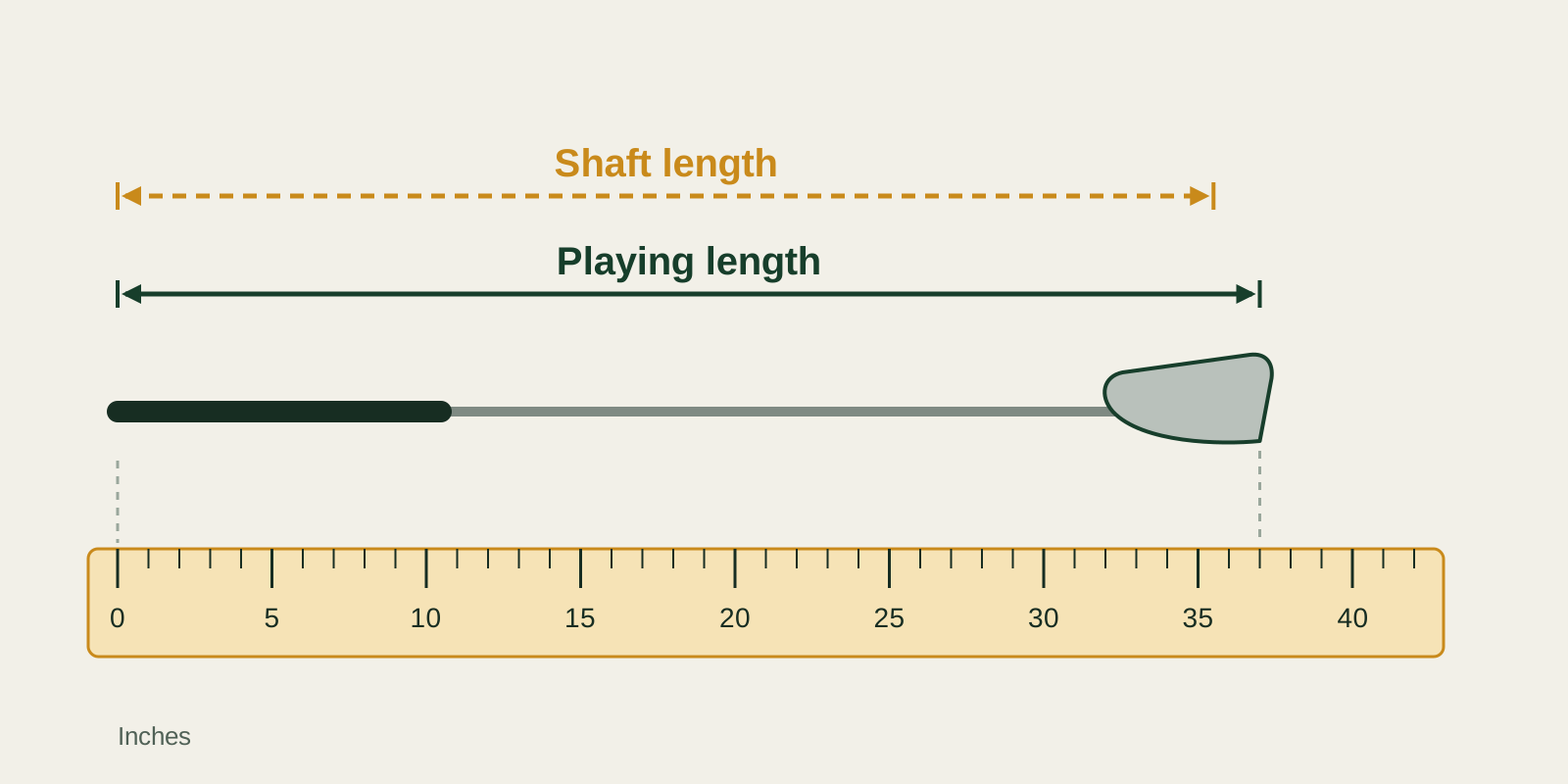
How to check golf club length
Record a repeatable measurement and avoid mixing shaft length, playing length and different measuring methods.
Read the guide