
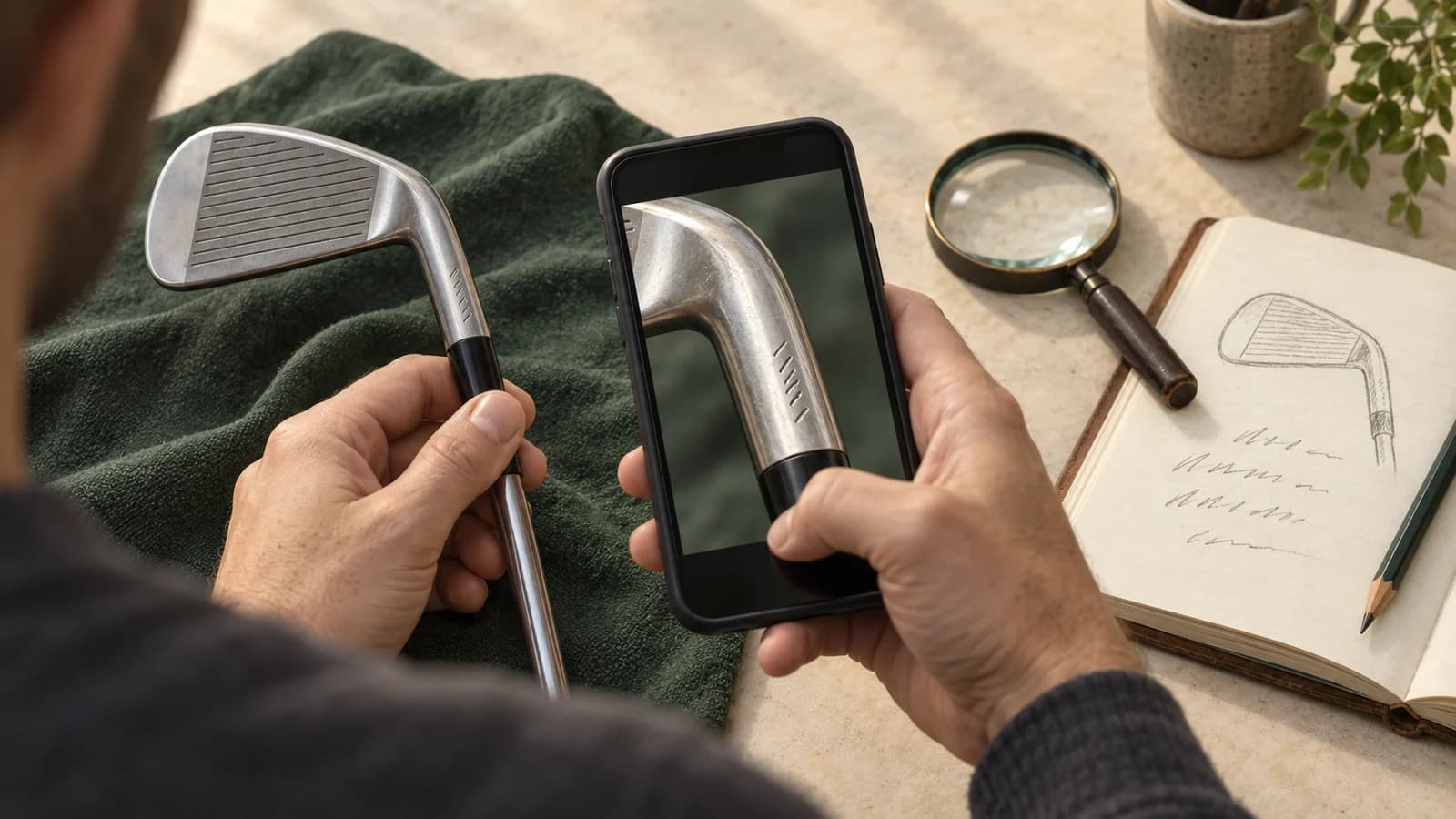
A serial number gives you something specific to photograph and ask Titleist about. Its usefulness depends on the context around it: the exact head, the market in which the set was sold, the original order and any later replacements. A number by itself cannot settle whether a used set is genuine or still matches its original build.
Why an older set may have a number on one iron
In a July 18, 2012 support reply, Team Titleist Canada staff member Mitch D described serial numbers on every iron for custom orders and only on the 6-iron for stock specifications. That dated explanation is useful context when checking an older set with a numbered 6-iron and unnumbered neighbors.
The reply comes from Canadian support in 2012. Confirm the relevant practice for your model and market before using that pattern to classify an individual set. Record markings on every club you have, and describe a faint or absent mark as an observation. Leave its cause unresolved until you have supporting information.
Keep the model identification alongside the number. The Titleist reference collectiongroups records by head family and generation; our identification checklistexplains the photographs to take before selecting a specification chart. For AP1 and AP2 sets, the hosel code decides which chart applies; our AP1 vs. AP2 loft comparison shows which generations share one.
A readable number needs supporting evidence
In a June 23, 2017 manufacturer support reply, Titleist Club Concierge Cathi explained that counterfeiters copy legitimate serial numbers onto counterfeit clubs. A number that resembles a valid one therefore leaves the identity of the physical head open to question.
Titleist's ANZ manager also advised a buyer of older AP2 irons to seek proof of original purchasein an October 7, 2013 reply. Ask the seller for that history and retain clear photographs of the actual heads. Treat a receipt or a matching marking as part of the evidence you can pass on for review, while keeping any unanswered authenticity question explicit.
Original order information describes a starting point
In an October 3, 2012 reply about club verification, Cath D explained that the specifications available from a serial inquiry describe the clubs as they left Titleist, unless Titleist itself performed the reshaft. This matters when a seller's current shaft differs from an original order record.
Keep any factory information Titleist supplies in an “original build” entry. Put current shaft labels, playing lengths and measured lofts or lies in a separate entry, with the measuring method and date. The used-iron checklistgives you questions to ask about alterations.
For an older set, ask what records are actually available. Leave its individual manufacture date, original custom adjustments and undocumented changes unknown until they are confirmed. This article offers no digit-by-digit date decoder or promise of a successful lookup.
Make the inquiry about the specific clubs
A short record makes an inquiry easier to follow. Save the original photographs as well as your transcription, so an uncertain character stays visible rather than becoming an assumed digit.
| Record | Include |
|---|---|
| Head identity | Family and generation markings, plus cavity, sole and face photographs. |
| Serial markings | The club number beside each readable marking, a close photograph and an exact transcription. Flag uncertain characters. |
| Purchase history | Original shop or seller, purchase documentation and the listing address if applicable. Mark unknown history clearly. |
| Current build | Shaft labels, disclosed replacements or adjustments, and any actual measurements with their method and date. |
For a concern about counterfeits, use Titleist's official reporting route. Its form requests product and seller or retail-location information. Describe the uncertainty and let Titleist direct the next step; submitting a report is separate from receiving an authenticity finding.
Preserve three separate conclusions in your notes: which model the markings suggest, what the original order evidence establishes, and what remains known about the clubs today. That keeps a useful serial inquiry from turning into an unsupported claim about the whole set.
Sources and their historical scope
Reviewed October 2, 2026. The historical evidence is Titleist's own support correspondence: Mitch D, Team Titleist Canada, July 18, 2012; Cath D, October 3, 2012; David M, Team Titleist ANZ manager, October 7, 2013; and Cathi, Titleist Club Concierge, June 23, 2017. These links contain community discussions; the statements used here are the manufacturer support replies, rather than other members' claims.
The US counterfeit-reporting page was also checked for the current route. The historical marking explanation remains limited to its time and context. No club was authenticated, inspected or measured for this article, and it establishes no universal Titleist serial-number format or manufacture-date rule.