
The short answer
The Z 585, ZX5 and ZX5 Mk II have the same standard chart from the 3-iron to the pitching wedge: a 31° 7-iron with a 62° lie at 37 inches and a 44° pitching wedge at 35½ inches. The Z 545 and Z 565 print those numbers too. The pages differ in which wedges they list, which clubs are custom only and which come left-handed.
So the generation is an identification question. You answer it from the badge and cavity, then check loft, lie and length on the actual clubs, since any of them may have been bent or reshafted since they left the factory.
One chart across five heads
The table below is built from our five catalog records, each transcribed from an Internet Archive capture of Srixon's own US product page. A row appears only if all five pages agree on loft, lie and length for that club. All eight do.
| Club | Loft | Lie | Length (in) |
|---|---|---|---|
| 3-iron | 20° | 60° | 39 |
| 4-iron | 22° | 60.5° | 38.5 |
| 5-iron | 24° | 61° | 38 |
| 6-iron | 27° | 61.5° | 37.5 |
| 7-iron | 31° | 62° | 37 |
| 8-iron | 35° | 62.5° | 36.5 |
| 9-iron | 39° | 63° | 36 |
| Pitching wedge | 44° | 63.5° | 35.5 |
The numbers step evenly: lie rises half a degree per club and length drops half an inch, from 39 inches at the 3-iron to 35½ at the pitching wedge. Loft gaps run 2° through the 5-iron, 3° to the 6-iron, then 4° per club and 5° to the pitching wedge. Our loft gap checker shows those steps for any chart in the catalog.
Matching factory charts tell you nothing about how the heads perform. The heads look different, and this article does not compare their construction. The same printed loft can launch differently from a different head. PING did the same with two of its irons; see G410 and G425 in our PING G-series comparison.
Where the tables do differ
The five pages part ways at the ends of the set, in the wedge rows, the custom-only footnotes and the handedness notes.
| Model | AW loft | SW loft | Handedness note |
|---|---|---|---|
| Z 545 | Not listed | Not listed | Available in Right Hand Only |
| Z 565 | 50° | Not listed | 3-PW Available in Right and Left Hand. AW Available in Right Hand Only. |
| Z 585 | 50° | Not listed | 3-PW Available in Right and Left Hand. AW Available in Right Hand Only. |
| ZX5 | 50° | Not listed | Not recorded from this page |
| ZX5 Mk II | 50° | 56° (custom only) | RH/LH 3–PW; AW, SW RH only per Srixon. |
- The Z 545 capture lists the 3-iron to the pitching wedge and no AW. The Z 565, Z 585, ZX5 and ZX5 Mk II all add a 50° AW at 35½ inches.
- The ZX5 Mk II page adds a 56° SW. It marks both the SW and the 3-iron with an asterisk, and the footnote says those clubs are custom only. A 3-iron in a used Mk II set is therefore a custom order, not part of the stock set.
- Where Srixon gives handedness, the gap wedges are right-handed only. Our original ZX5 record has no handedness note, so we leave that blank rather than copy it from a neighboring model.
- Srixon also listed a women's ZX5 Mk II build, 5-iron to AW, right-handed only. It uses the same lofts and lies with shorter lengths, including a 36¼-inch 7-iron. A ZX5 Mk II 7-iron that measures 36¼ inches may be that stock build, not a cut-down club.
Read the badge, not the loft
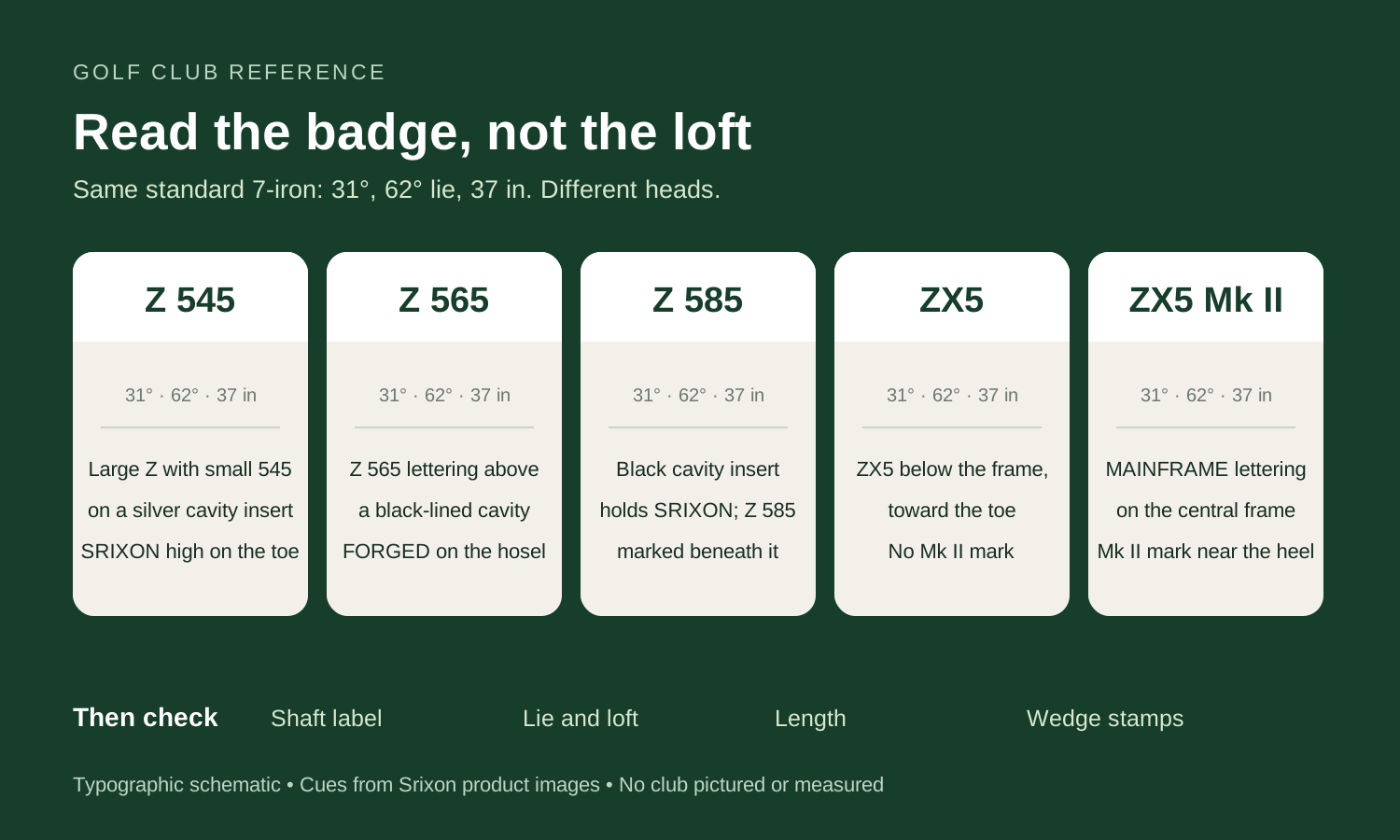
The quickest way to tell these sets apart is to photograph the back of the 7-iron in good light and compare it with each model page. These are the markings we checked against Srixon's own product images:
- Z 545: a large Z with small 545 lettering on a silver insert inside an undercut cavity, with SRIXON high on the heel side.
- Z 565: Z 565 lettering above a black-lined cavity that holds the SRIXON wordmark. The hosel in Srixon's image reads FORGED.
- Z 585: a black insert fills the cavity around the SRIXON wordmark, with Z 585 marked beneath it. FORGED again appears on the hosel.
- ZX5: no black insert. SRIXON sits on a stepped chrome frame and ZX5 is lettered below it toward the toe, with no Mk II mark.
- ZX5 Mk II: MAINFRAME lettering along the central frame, ZX with a small 5, and a small Mk II mark up near the heel.
ZX5 and ZX5 Mk II are the easiest pair to confuse, since on the head the names differ by that small heel mark. If a listing's photos don't show the back of the head clearly, ask for one before you rely on the title. Our guide to identifying older irons covers the rest of a photo checklist.
Z 355 matches; ZX4 does not
The shared chart reaches beyond the 5 line. Srixon's Z 355 page lists 4-iron to AW with the same lofts, lies and lengths: 22° to 50°, with the same 31° 7-iron. A Z 355 is a separate head with its own marking, so the numbers alone can't separate it from a Z 545 or Z 585 either.
The ZX4, listed with the original ZX5 and ZX7, does break the pattern. Its page lists a 28.5° 7-iron and a 43° pitching wedge, so a ZX4 7-iron is 2.5° stronger than the ZX5 on paper. That does not make a ZX4 a “longer” ZX5; loft alone doesn't settle carry or fit.
The 7 line follows the same pattern
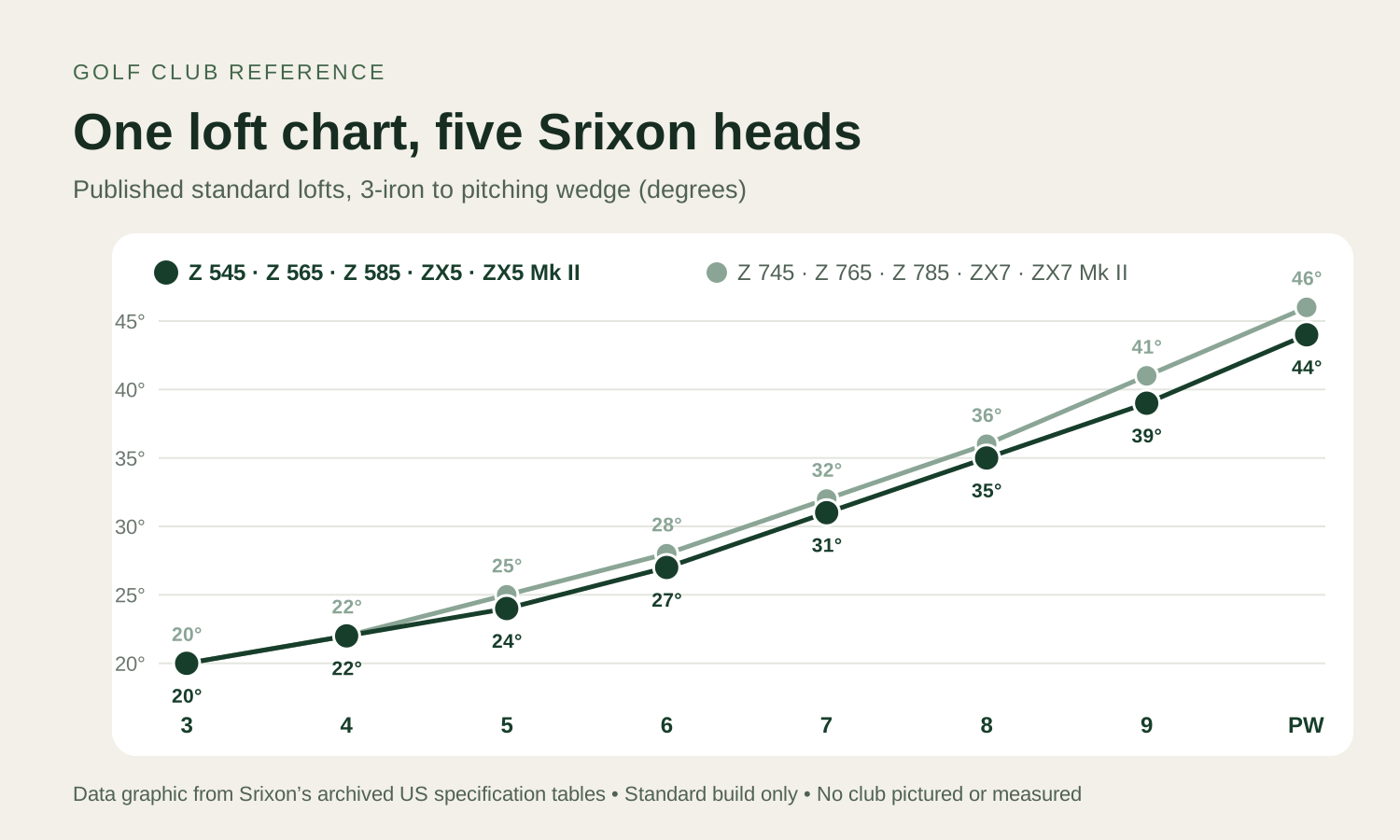
Srixon did the same thing with its 7-numbered irons. The Z 745, Z 765, Z 785, ZX7 and ZX7 Mk II pages share one 3-iron to pitching wedge chart. It matches the 5 line in every lie and length. Lofts match at the 3- and 4-iron and are weaker from there down.
| Club | Z 545 to ZX5 Mk II | Z 745 to ZX7 Mk II | Difference |
|---|---|---|---|
| 3-iron | 20° | 20° | Same |
| 4-iron | 22° | 22° | Same |
| 5-iron | 24° | 25° | 1° weaker |
| 6-iron | 27° | 28° | 1° weaker |
| 7-iron | 31° | 32° | 1° weaker |
| 8-iron | 35° | 36° | 1° weaker |
| 9-iron | 39° | 41° | 2° weaker |
| Pitching wedge | 44° | 46° | 2° weaker |
The gap wedges follow suit: the AW rows read 51° for the 7 line (where listed) against 50° for the 5 line, and the ZX7 Mk II's custom-only SW is 57° against the ZX5 Mk II's 56°. Like the Z 545, the Z 745 page lists no AW. A mixed ZX5/ZX7 set is a combo build, and the loft step where the heads meet is worth checking. The Titleist 718 combo-set article walks through that kind of check, and the iron comparison tool puts any two full charts side by side.
Checking a used set
- Identify the head from the back and hosel markings. Match it to one model page before looking at any number.
- Write down which clubs are in the set. A Z 545 with an AW stamped the same way, or a ZX5 Mk II with a 3-iron, is worth a question about where those clubs came from.
- Note the installed shaft and grip from their labels. None of these charts ties its length row to one named stock shaft, and either may have been replaced.
- Measure length, and have loft and lie checked if the numbers matter to you. See our guides to measuring club length and lie angle. Keep your measurements next to the factory figures, not in place of them.
- Run through the used-iron checklist for condition and alteration questions.
A set that measures exactly to the chart is consistent with stock, but it can't tell you which of the five heads you have. A set that measures off the chart has been altered, built to a custom spec, or measured differently. All of Srixon's older models are listed on our Srixon brand page.
Sources and limits
Figures come from Internet Archive captures of Srixon's US product pages, transcribed into our catalog and reviewed October 7, 2026: Z 545, Z 565, Z 585, ZX5, ZX5 Mk II; the 7 line Z 745, Z 765, Z 785, ZX7, ZX7 Mk II; and Z 355 and ZX4. The tables on this page are generated from those records, so they cannot drift from the model pages. Capture dates are page dates, not release years, and we assign no release year to any model here.
The archived pages could not be reopened from the environment used to write this article, so the figures rely on the catalog transcription rather than a fresh second reading. The badge cues come from the Srixon product images on each model page. No clubs were inspected, measured or hit for this article, and nothing here predicts distance or says which set suits a particular golfer.