Wilson D7 irons (2019 US page)
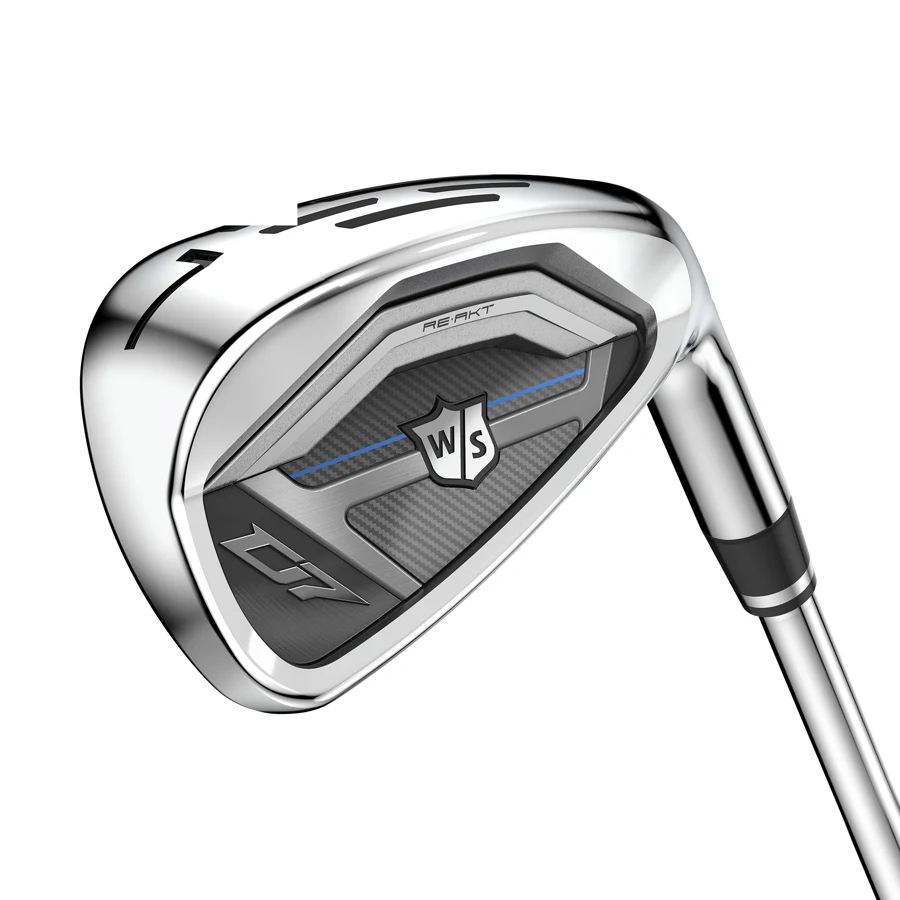
D7 from Wilson’s archived US product page, with a 28° 7-iron and 43° pitching wedge.
Loft, lie & length chart
Standard lengths from Wilson’s US specification table, in inches.
| Club | Loft (°) | Lie (°) | Length (in) |
|---|---|---|---|
| 4 | 19 | 60 | 39 |
| 5 | 22 | 61 | 38.5 |
| 6 | 25 | 61.5 | 38 |
| 7 | 28 | 62 | 37.5 |
| 8 | 33 | 63 | 37 |
| 9 | 38 | 63.5 | 36.5 |
| PW | 43 | 64 | 36 |
| GW | 48 | 64 | 35.75 |
| SW | 54 | 64 | 35.5 |
Source: Wilson Staff D7 men’s irons (steel) page, Internet Archive capture of 2019-10-04. Checked 2026-10-16.
How to identify this generation
- A dark carbon-patterned insert crossed by a thin blue line carries the W/S shield, with RE·AKT lettering above it and a large D7 at the lower toe; three slots are cut into the upper toe.
- The D7 name also appears on these Wilson irons; compare their markings before using this chart: D7 Forged (2020 US page).
What to notice in the specifications
- Wilson shows this table as an image on the page; the values were transcribed from it. The 4-iron and sand wedge are marked as custom options, so the stock set runs 5-iron to GW.
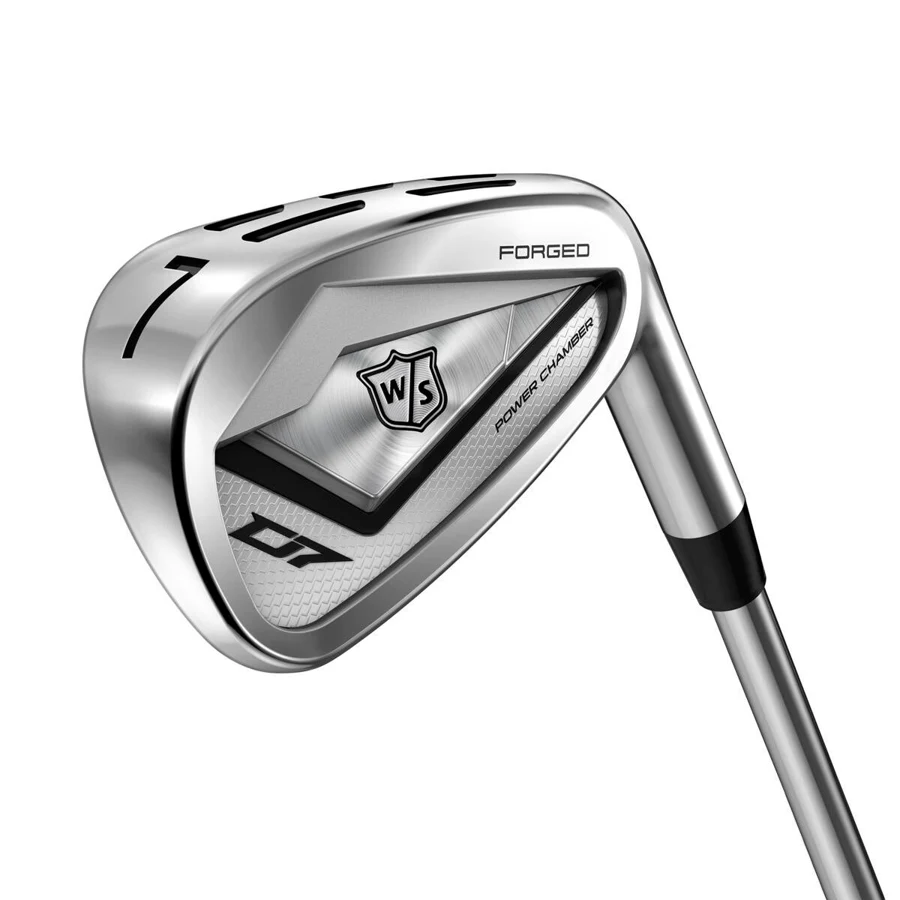
- The D7 Forged is a separate head with weaker lofts (a 30.5° 7-iron against 28° here); it has FORGED on the back.
Read our loft guide for a worked example of comparing the numbers, and our used iron checklist before relying on a seller's description.
Continue with Wilson
D7 Forged irons (2020 US page)
D7 Forged from Wilson’s archived US product page, with a 30.5° 7-iron and 44° pitching wedge.
Staff Model Blade irons (2026 US page)
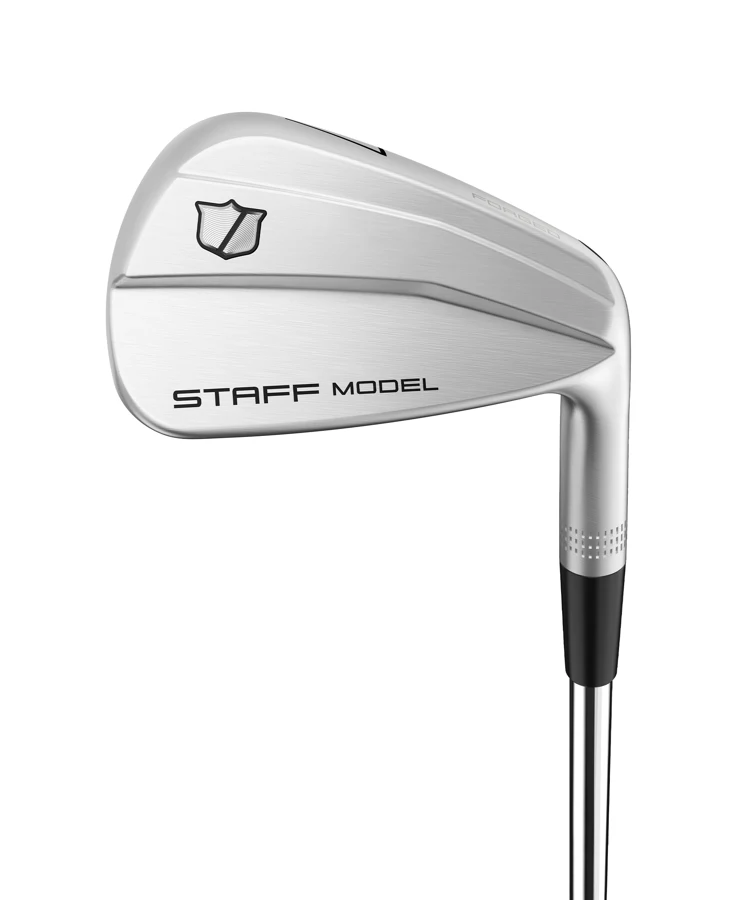
Staff Model Blade from Wilson’s current US product page, with a 34° 7-iron and 46° pitching wedge.
Staff Model CB irons (2026 US page)
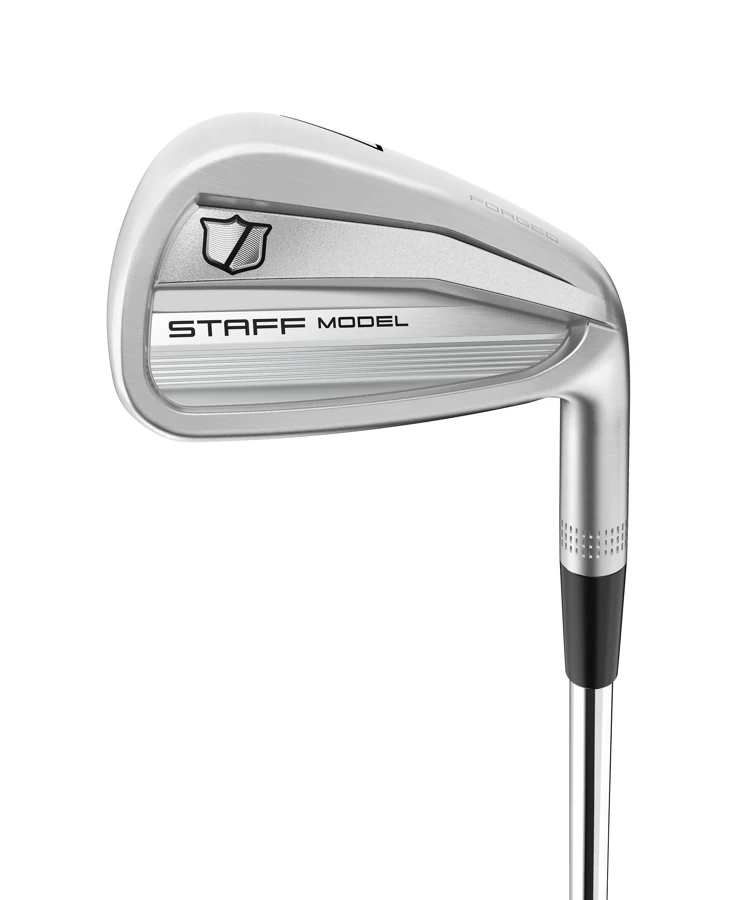
Staff Model CB from Wilson’s current US product page, with a 34° 7-iron and 46° pitching wedge.
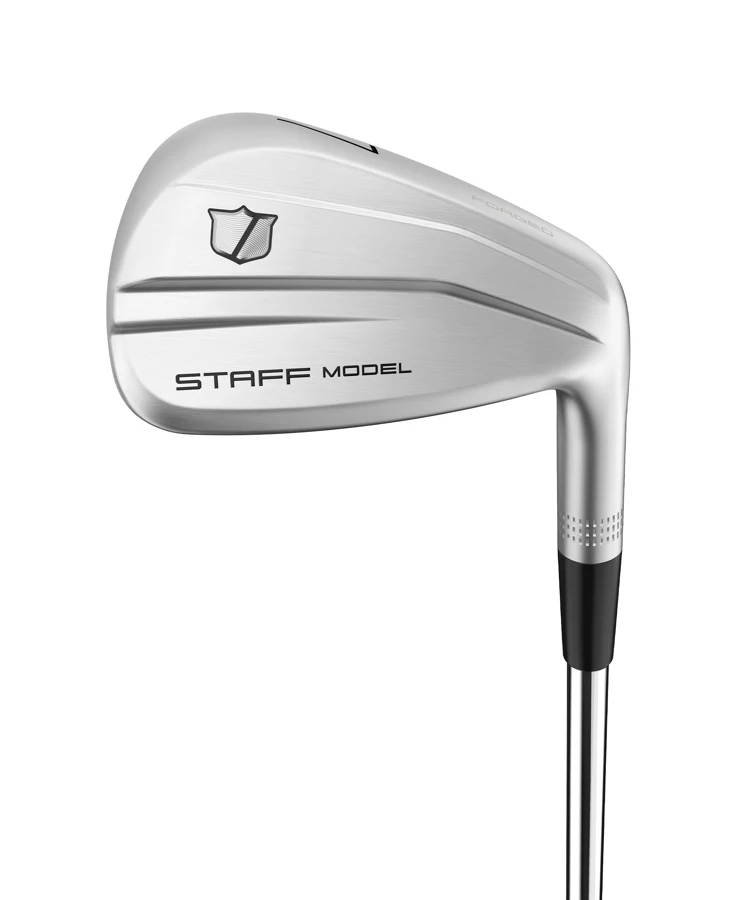
Staff Model XB irons (2026 US page)
Staff Model XB from Wilson’s current US product page, with a 32° 7-iron and 46° pitching wedge.