Ben Hogan irons, generation by generation.
Compare the forged 1998 Apex blade, the perimeter-weighted Apex Plus and the 2001 Apex Edge from Ben Hogan's own specification pages. This is the current collection, rather than a complete history of every Ben Hogan iron.
Ben Hogan iron sets at a glance
Ben Hogan calls the pitching wedge the Equalizer (E or EQ) and the sand wedge the Sand Iron (SI). Apex was reused across several generations (1988, 1994, 1998), so match the exact head and its markings before comparing.
| Model and generation | Model year | 7-iron | Pitching wedge | Listed clubs |
|---|---|---|---|---|
| Apex irons (1998) | 1998 | 36° | 48° | 1–SI |
| Apex Plus irons (2000 US page) | Not stated | 34° | 46° | 1–L |
| Apex Edge irons (2001) | 2001 | 34° | 46° | 1–LW |
Listed clubs show the manufacturer's specification range, not the contents of every retail or used set. Model years are shown only where the source states one. Equal loft does not establish equal carry distance or fit.
To see how these lofts compare with other brands and with older sets, read our 7-iron loft study. Not sure which of these sets you own? Narrow them down by name, era or 7-iron loft with the Ben Hogan iron year finder.
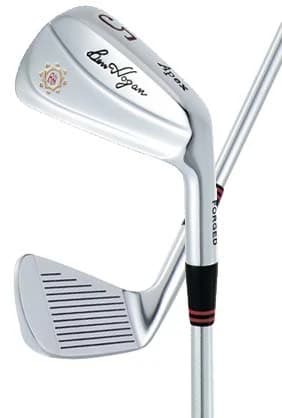
Apex irons (1998)
The 1998 Ben Hogan Apex forged blade, with a 36° 7-iron and 48° Equalizer (pitching wedge).
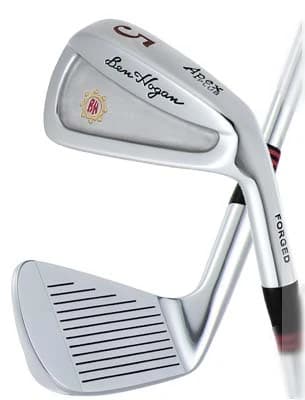
Apex Plus irons (2000 US page)
Ben Hogan Apex Plus, with a 34° 7-iron and 46° pitching wedge.
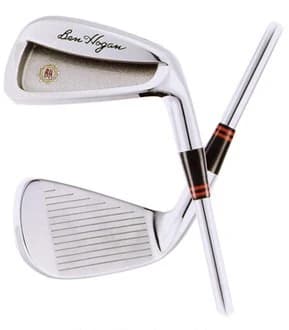
Apex Edge irons (2001)
Ben Hogan Apex Edge, with a 34° 7-iron and 46° pitching wedge.
Finding the right record
The family name and generation must both match. A reused name can refer to different heads. A generation code or archive year is an identification label, not proof of an individual club's manufacture date.
Read the build notes alongside the table. Standard shaft lengths, custom orders and later modifications can all affect the clubs in a used set.
Use our used iron checklist →