Original iron specifications
Ben Hogan Apex Plus irons (2000 US page)
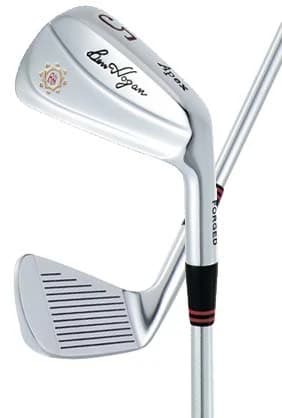
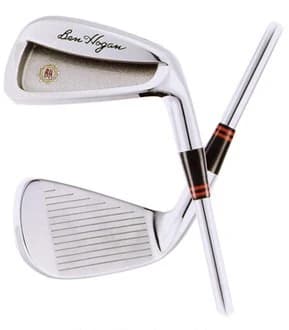
Ben Hogan Apex Plus, with a 34° 7-iron and 46° pitching wedge.
7-iron loft34°
Pitching wedge loft46°
7-iron length36.75 in
Loft, lie & length chart
Ben Hogan’s published standard steel-shaft specifications. Custom lie, length and loft orders change the build.
| Club | Loft (°) | Lie (°) | Length (in) |
|---|---|---|---|
| 1 | 16 | 58 | 39.75 |
| 2 | 18 | 58 | 39.25 |
| 3 | 20 | 60 | 38.75 |
| 4 | 23 | 60.5 | 38.25 |
| 5 | 26 | 61 | 37.75 |
| 6 | 30 | 61.5 | 37.25 |
| 7 | 34 | 62 | 36.75 |
| 8 | 38 | 62.5 | 36.25 |
| 9 | 42 | 63 | 35.75 |
| PW | 46 | 64 | 35.5 |
| F | 50 | 64 | 35.5 |
| S | 56 | 64 | 35 |
| L | 60 | 64 | 35 |
Source: Ben Hogan Apex Plus irons standard specifications, Internet Archive capture of benhogan.com dated 2000-05-11. Checked 2026-10-08.
How to identify this generation
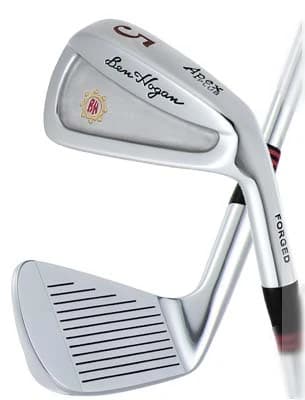
- APEX PLUS is lettered high on the heel side, beside the club number, with a Ben Hogan script and the round Hogan medallion on a perimeter-weighted back; the hosel reads FORGED.
What to notice in the specifications
- Ben Hogan describes the Apex Plus as a forged, perimeter-weighted version of the Apex. Its lofts are stronger than the 1998 Apex blade (34° against 36° at the 7-iron).
- Ben Hogan names the pitching wedge the Equalizer (E) and lists F, S and L wedges at 50°, 56° and 60°. The Equalizer is shown as PW here.
- The chart lists steel lengths. Ben Hogan’s graphite lengths are 0.5" longer for every club.
- The chart comes from Ben Hogan’s “Standard Specifications” page on benhogan.com, Internet Archive capture dated 2000-05-11. Ben Hogan’s pages do not state a release year, so the capture year is used only as a page label.
Checking a club you own? These are the maker's published figures for an original build, not measurements of your club, and a source date is not the year it was made. Bending, reshafting or a hosel adjustment changes loft, lie and length, so identify the head by its own markings and have a fitter measure it when its history is unclear.
Read our loft guide for a worked example of comparing the numbers, and our used iron checklist before relying on a seller's description.