Original iron specifications
Ben Hogan Apex Edge irons (2001)
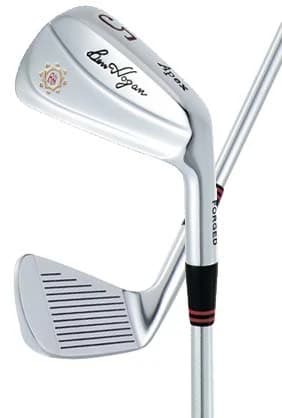
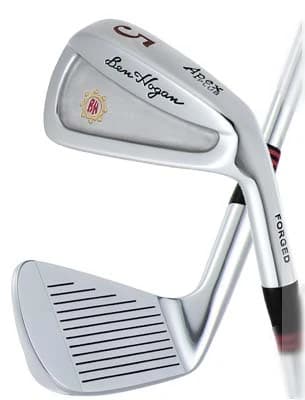
Ben Hogan Apex Edge, with a 34° 7-iron and 46° pitching wedge.
7-iron loft34°
Pitching wedge loft46°
7-iron length36.75 in
Loft, lie & length chart
Ben Hogan’s published standard steel-shaft specifications. Custom lie, length and loft orders change the build.
| Club | Loft (°) | Lie (°) | Length (in) |
|---|---|---|---|
| 1 | 16 | 59.5 | 39.75 |
| 2 | 18 | 60 | 39.25 |
| 3 | 20 | 60.5 | 38.75 |
| 4 | 23 | 61 | 38.25 |
| 5 | 26 | 61.5 | 37.75 |
| 6 | 30 | 62 | 37.25 |
| 7 | 34 | 62.5 | 36.75 |
| 8 | 38 | 63 | 36.25 |
| 9 | 42 | 63.5 | 35.75 |
| PW | 46 | 64 | 35.5 |
| FW | 50 | 64 | 35.5 |
| SI | 56 | 64 | 35 |
| LW | 60 | 64 | 35 |
Source: Ben Hogan Apex Edge irons standard specifications, Internet Archive capture of benhogan.com dated 2001-01-24. Checked 2026-10-08.
How to identify this generation
- A large undercut cavity back with a Ben Hogan script above the cavity and the round Hogan medallion inside it at the toe. The photo does not show the model name, so check for Apex Edge on the club itself.
What to notice in the specifications
- Ben Hogan announced the Apex Edge on January 26, 2001 as a two-piece forged game-improvement iron. The later Apex Edge Pro (2002) is a different, one-piece head and is not covered by this chart.
- Ben Hogan names the pitching wedge the Equalizer (EQ) and lists FW, SI and LW wedges at 50°, 56° and 60°. The Equalizer is shown as PW here.
- The chart lists steel lengths. Ben Hogan’s graphite lengths are 0.5" longer for every club. The table also gives offset, which is not charted here.
- The chart comes from Ben Hogan’s “Standard Specifications” page on benhogan.com, Internet Archive capture dated 2001-01-24. The model year is stated by Ben Hogan; individual clubs may have been built later.
Checking a club you own? These are the maker's published figures for an original build, not measurements of your club, and a source date is not the year it was made. Bending, reshafting or a hosel adjustment changes loft, lie and length, so identify the head by its own markings and have a fitter measure it when its history is unclear.
Read our loft guide for a worked example of comparing the numbers, and our used iron checklist before relying on a seller's description.