Start with the head, not a seller's model-year guess. TaylorMade published separate M2 iron sheets for 2016 and 2017. Both list a 28.5° 7-iron and a 43.5° pitching wedge in the stock tables. Those matches do not make the sets identical.
How to tell the two M2 generations apart
The 2016 M2 sheet shows a V-shaped badge on the back cavity. The 2017 M2 sheet shows a fin-style cavity badge and describes Face Slots near the heel and toe. Compare the actual head, face and hosel with the linked manufacturer images. Shaft and grip labels are weaker clues because those parts may have been replaced.
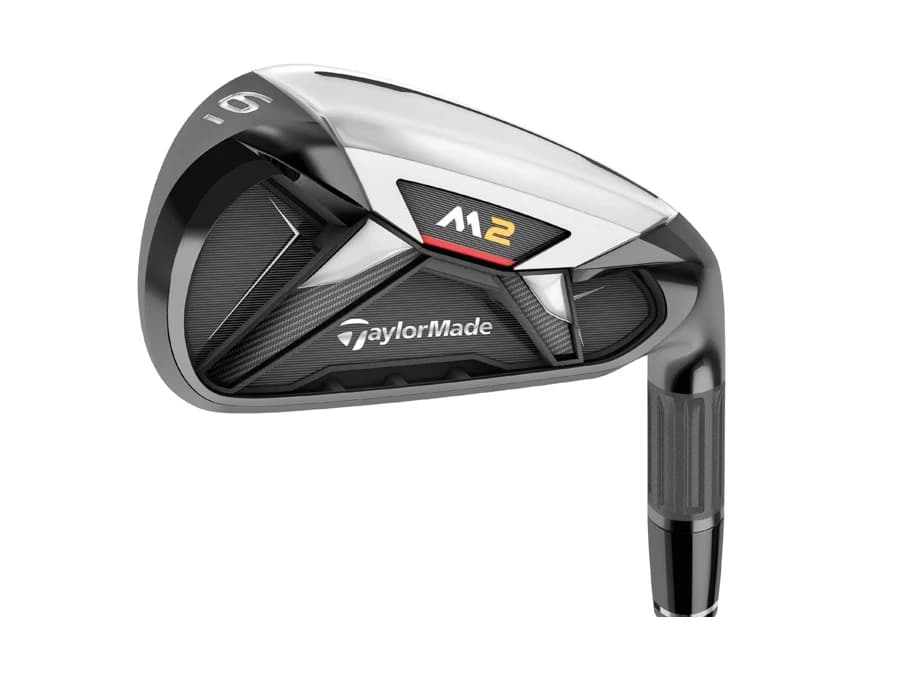
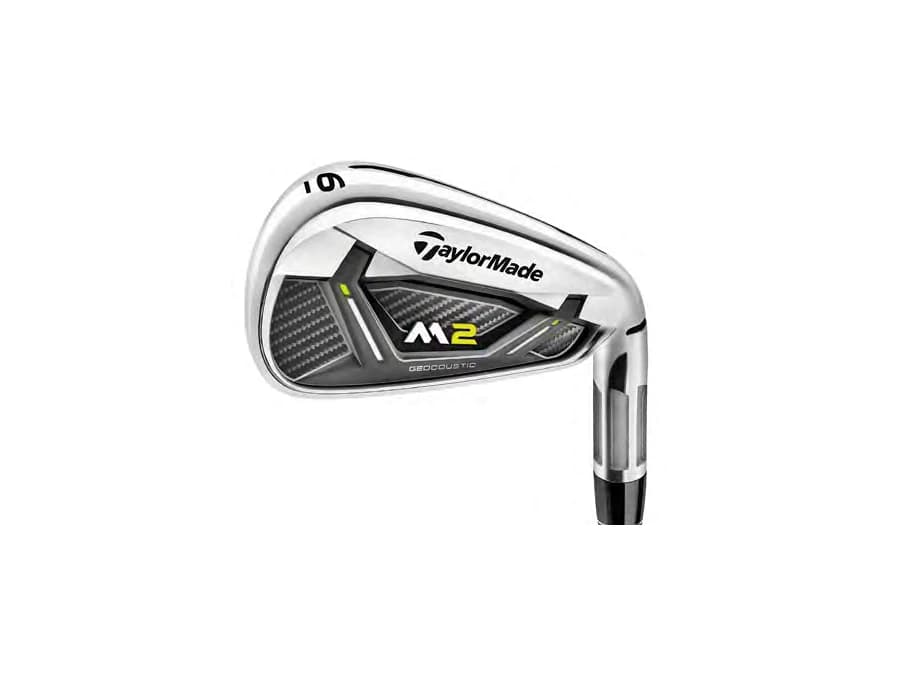
A photo of a head is useful for identification, but it cannot prove when that individual club was made or whether its current loft and lie still match the original table.
What changed in the published specifications?
The tables agree on the standard 7-iron loft, lie and length: 28.5°, 63° and 37 inches. The pitching wedge is also 43.5° in both. Differences show up elsewhere:
| Specification | 2016 M2 | 2017 M2 |
|---|---|---|
| 4-iron lie | 61° | 61.5° |
| 5-iron lie | 61.75° | 62° |
| 7-iron loft | 28.5° | 28.5° |
| Sand wedge loft | 55° | 54° |
| Lob wedge loft | 60° | 59° |
The 2016 sheet prints some long-iron lengths to three decimal places, such as 38.875 inches for the 4-iron. The 2017 sheet prints 38.88 inches. That displayed difference is consistent with rounding; it should not be treated as proof of a meaningful change in playing length. Check the source precision before comparing small numbers.
If you are looking at one particular set, start with its 2016 record or 2017 record for the complete rows and build notes. Our side-by-side tool lets you check every listed club label.
What should you check on a used set?
- Ask for clear cavity, face, sole and hosel photos, then match the head to the right manufacturer sheet.
- List the irons and wedges actually included. The published range is not a promise that a seller has every wedge.
- Ask whether loft, lie, length or shafts have been changed. A factory chart describes the original build, not the current measurements.
- If a small specification difference matters to a purchase or fitting choice, have the actual clubs measured by a qualified fitter.
The 1° stock difference at the sand and lob wedges is useful for identifying which table you are reading. It cannot predict your carry gap or determine whether the clubs fit you. See our loft explanation and used iron checklist for the wider context.
Original sources
Numbers and identification cues above were checked against the TaylorMade 2016 M2 iron specification sheet and TaylorMade 2017 M2 iron specification sheet on September 27, 2026. The comparison table is our transcription of selected facts, not a reproduced catalog chart. A manufacturer specification cannot certify the condition or present setup of an individual used set.