Titleist Forged 775.CB irons (2006 page)
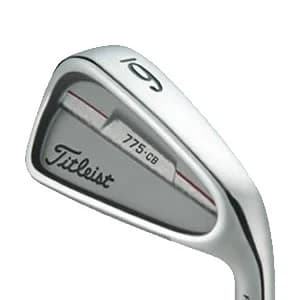
Titleist Forged 775.CB (2006 page), with a 33° 7-iron and 45° pitching wedge in Titleist’s published table.
Loft, lie & length chart
Titleist’s standard specification table, lengths in inches.
| Club | Loft (°) | Lie (°) | Length (in) |
|---|---|---|---|
| 3 | 20 | 60 | 39.5 |
| 4 | 23 | 61 | 38.75 |
| 5 | 26 | 62 | 38 |
| 6 | 29 | 62.5 | 37.5 |
| 7 | 33 | 63 | 37 |
| 8 | 37 | 63.5 | 36.5 |
| 9 | 41 | 64 | 36 |
| PW | 45 | 64 | 35.75 |
| W | 50 | 64 | 35.5 |
Source: Titleist Forged 775.CB irons (2006 page) model page. Checked 2026-10-08.
How to identify this generation
- A wide cavity with a Titleist script, a 775·CB badge and a thin red line along the upper cavity.
- Several Titleist Forged models share similar lofts; read the model number on the back of the head.
What to notice in the specifications
- Titleist labels the gap wedge “W” (with W2 and W3 for weaker models); the labels are kept as published.
Read our loft guide for a worked example of comparing the numbers, and our used iron checklist before relying on a seller's description.
Continue with Titleist
Forged 755 irons (2006 page)
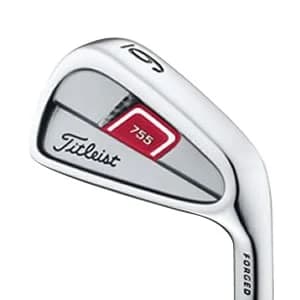
Titleist Forged 755 (2006 page), with a 35° 7-iron and 47° pitching wedge in Titleist’s published table.
Forged 695MB irons (2006 page)
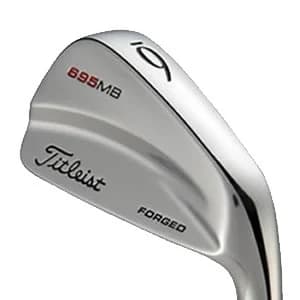
Titleist Forged 695MB (2006 page), with a 36° 7-iron and 48° pitching wedge in Titleist’s published table.
Forged 695CB irons (2006 page)
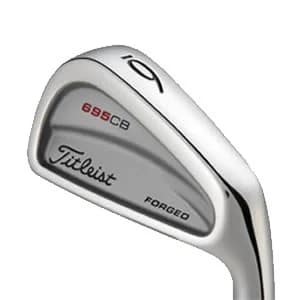
Titleist Forged 695CB (2006 page), with a 34° 7-iron and 46° pitching wedge in Titleist’s published table.
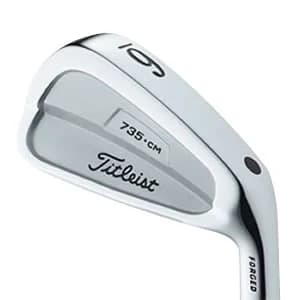
Forged 735.CM irons (2006 page)
Titleist Forged 735.CM (2006 page), with a 35° 7-iron and 47° pitching wedge in Titleist’s published table.