Titleist Forged 755 irons (2006 page)
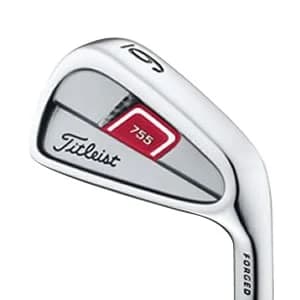
Titleist Forged 755 (2006 page), with a 35° 7-iron and 47° pitching wedge in Titleist’s published table.
Loft, lie & length chart
Titleist’s standard specification table, lengths in inches.
| Club | Loft (°) | Lie (°) | Length (in) |
|---|---|---|---|
| 2 | 19 | 59 | 39.5 |
| 3 | 22 | 60 | 39 |
| 4 | 25 | 61 | 38.5 |
| 5 | 28 | 62 | 38 |
| 6 | 31 | 62.5 | 37.5 |
| 7 | 35 | 63 | 37 |
| 8 | 39 | 63.5 | 36.5 |
| 9 | 43 | 64 | 36 |
| PW | 47 | 64 | 35.75 |
Source: Titleist Forged 755 irons (2006 page) model page. Checked 2026-10-08.
How to identify this generation
- A red 755 badge sits mid-cavity, above and heel-side of a Titleist script; the hosel reads FORGED.
- Several Titleist Forged models share similar lofts; read the model number on the back of the head.
What to notice in the specifications
- Titleist publishes the same lofts, lies and lengths for Forged 735.CM (2006 page). The heads differ, so read the model markings rather than relying on these numbers.
Read our loft guide for a worked example of comparing the numbers, and our used iron checklist before relying on a seller's description.
Continue with Titleist
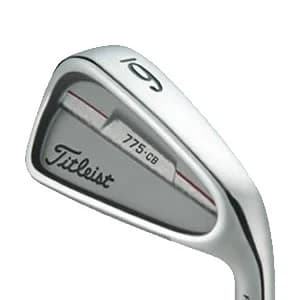
Forged 775.CB irons (2006 page)
Titleist Forged 775.CB (2006 page), with a 33° 7-iron and 45° pitching wedge in Titleist’s published table.
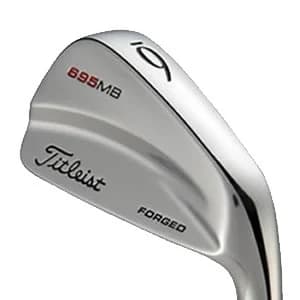
Forged 695MB irons (2006 page)
Titleist Forged 695MB (2006 page), with a 36° 7-iron and 48° pitching wedge in Titleist’s published table.
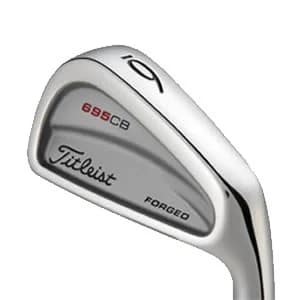
Forged 695CB irons (2006 page)
Titleist Forged 695CB (2006 page), with a 34° 7-iron and 46° pitching wedge in Titleist’s published table.
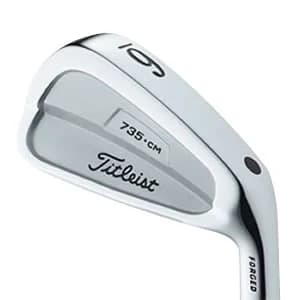
Forged 735.CM irons (2006 page)
Titleist Forged 735.CM (2006 page), with a 35° 7-iron and 47° pitching wedge in Titleist’s published table.