
The short answer
Every slice has the same cause at impact: the face points to the right of the club path. A weak grip, aiming left or an over-the-top downswing matters because it moves one of those two directions. On a driver, a heel strike adds slice spin on top of that.
The classic slice combines both problems. The face is open and the club travels from outside the target line to inside it. Setup changes that help the face are the easiest place to begin, because they happen before you swing. Your start line then tells you whether the path needs most of the work.
This guide uses right-handed directions throughout. Left-handed golfers can mirror every left and right.
Face angle starts it, face to path curves it
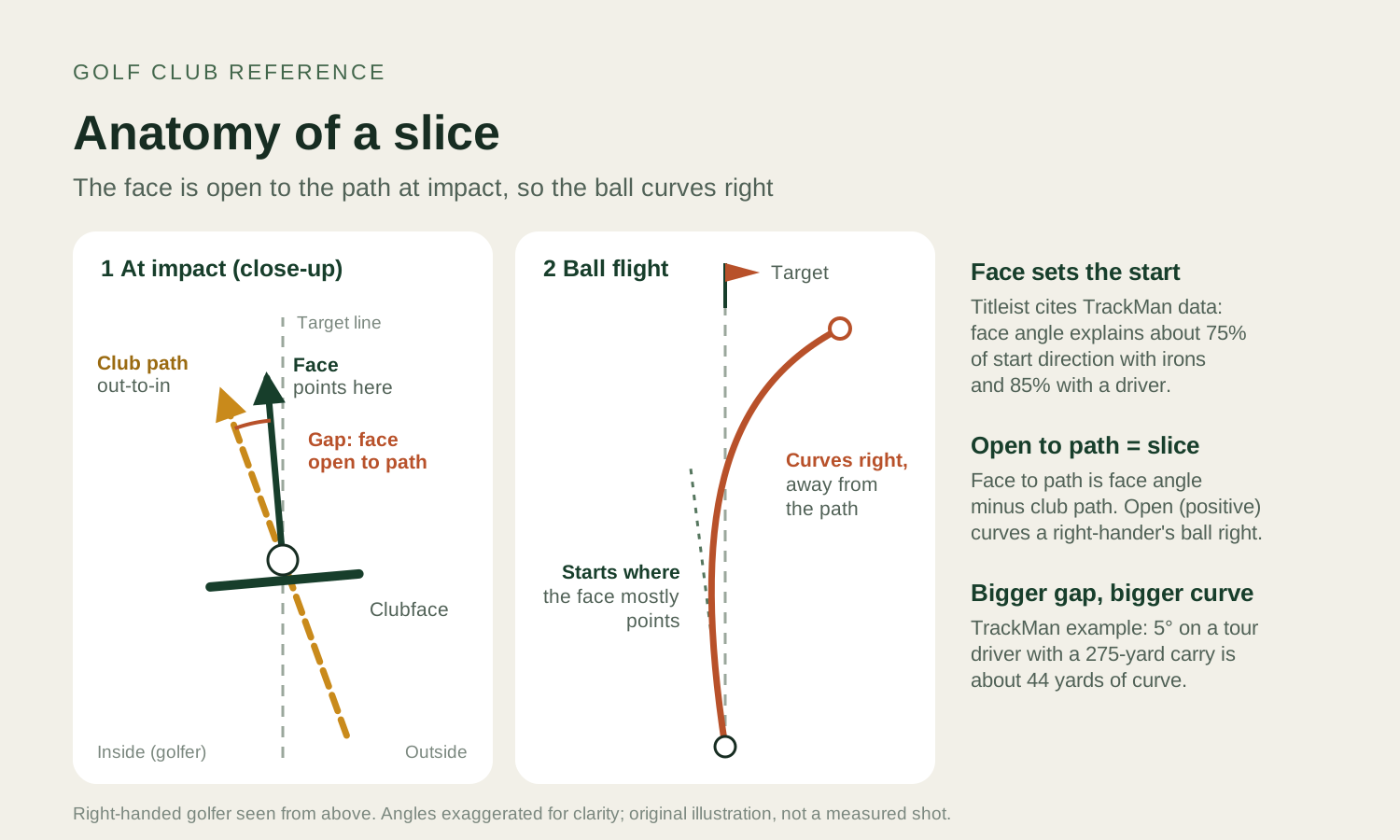
TrackMan measures two horizontal directions at impact. Face angle is where the face points relative to the target line. Club path is the direction the clubhead is moving. Their difference, face angle minus club path, is called face to path. A positive figure means the face is open to the path, and with a centered strike the ball curves toward the face and away from the path. For a right-hander, that curve goes right.
The face also does most of the work on start direction. Titleist's Learning Lab cites TrackMan data that puts face angle at roughly 75% of a ball's initial direction with irons and about 85% with a driver; path accounts for the rest. A ball that starts right usually left a face pointing right.
A few degrees produce a lot of curve. TrackMan's own examples assume centered contact:
| Club and carry | Face to path | Approximate curve |
|---|---|---|
| PGA TOUR driver, 275 yards | 5° | 44 yards right |
| PGA TOUR 6-iron, 183 yards | 2° | 8 yards right |
| LPGA Tour 6-iron, 152 yards | 5° | 14 yards right |
These are reference cases at tour carry distances. They do not predict your own curve, but they show why a slice tends to look worst with the driver: a longer, faster shot turns the same face-to-path gap into more yards of curve.
Read your slice: pull, straight or push
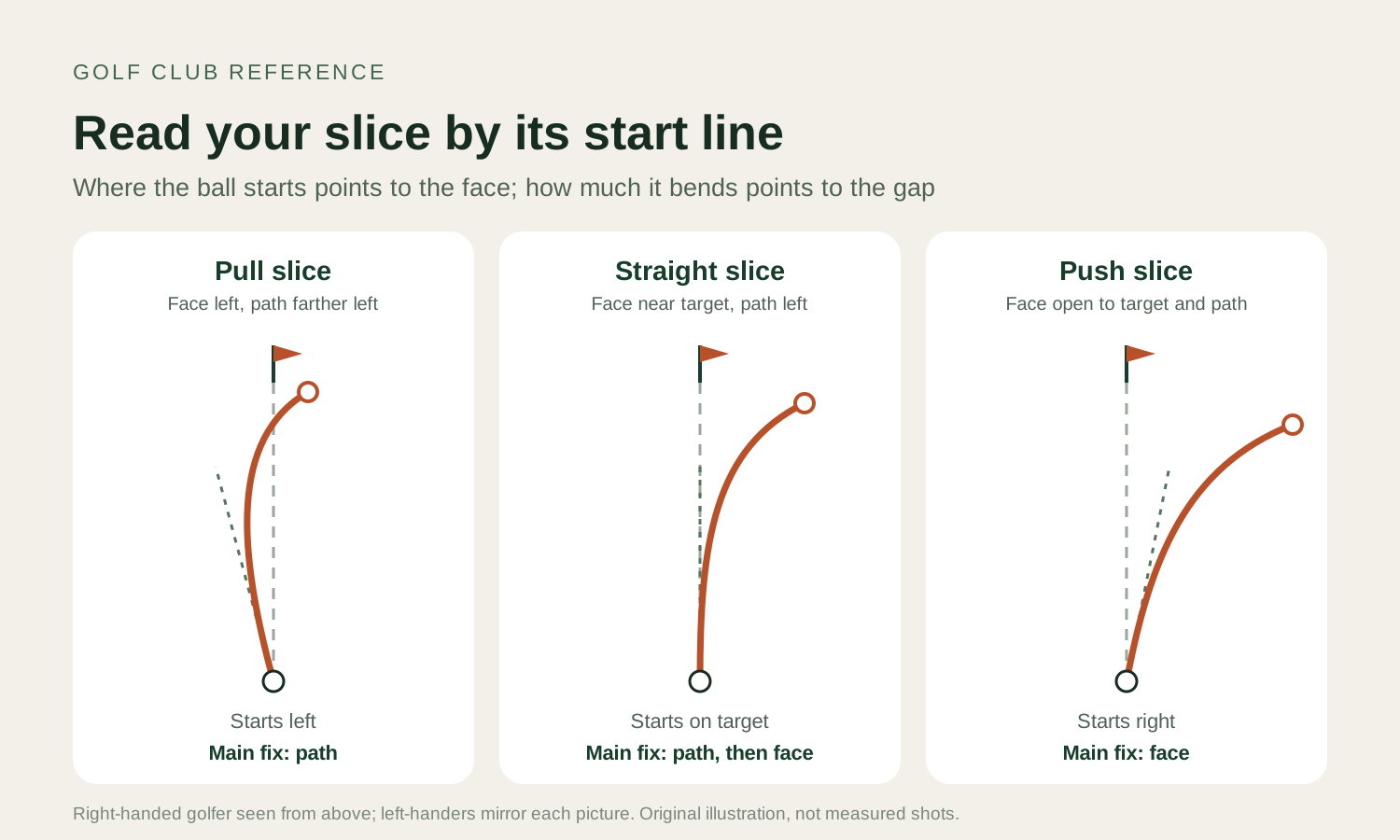
Because face angle mostly sets the start line and face to path sets the curve, the ball flight tells you where to look. Watch where the ball starts, not only where it finishes.
| Pattern | Start | Likely impact picture | Main fix |
|---|---|---|---|
| Pull slice | Left of target | Face left, path farther left | Path |
| Straight slice | On target | Face near target, path left | Path, then face |
| Push slice | Right of target | Face open to target and to path | Face |
A pull slice is the out-to-in swing in its plainest form. The face is closed to the target but still open to a path that points even farther left. A push slice is mainly a face problem: the face is open at impact, so the ball starts right and keeps going.
A launch monitor takes the guessing out of this. If you have access to one through a lesson or a store bay, look at face angle, club path and face to path as well as carry distance.
Start with the face: grip, aim and ball position
Setup is easier to change than the swing itself, so begin there.
Grip
A grip that is too weak, with the hands turned toward the target, makes it hard to return the face to square. PGA Professional Vinnie Manginelli names it as a cause of an open face at impact. Turning the lead hand a little away from the target, so you see more of its knuckles at address, gives the face a better chance to close. Change it in small steps; an exaggerated grip can swap a slice for a hook.
Aim
Many slicers aim farther left to leave room for the curve. Manginelli warns against it, because aiming left encourages the cutting, out-to-in swing that caused the slice in the first place. Set your feet, hips and shoulders square to the target line instead, with an alignment stick on the ground if it helps.
Ball position
Where the ball sits in your stance affects where the face is when the club reaches it. Manginelli's point is that a ball played too far back can be struck before the face has squared.
Fix the out-to-in swing path
An out-to-in path means the clubhead approaches the ball from outside the target line and leaves to the inside. With an open face, that combination produces the largest face-to-path numbers and the biggest slices.
Manginelli's cue is to keep the trail elbow close to the trail side in the downswing. When that elbow drifts away from the body, the clubhead moves outside and comes into the ball on the familiar cutting path.
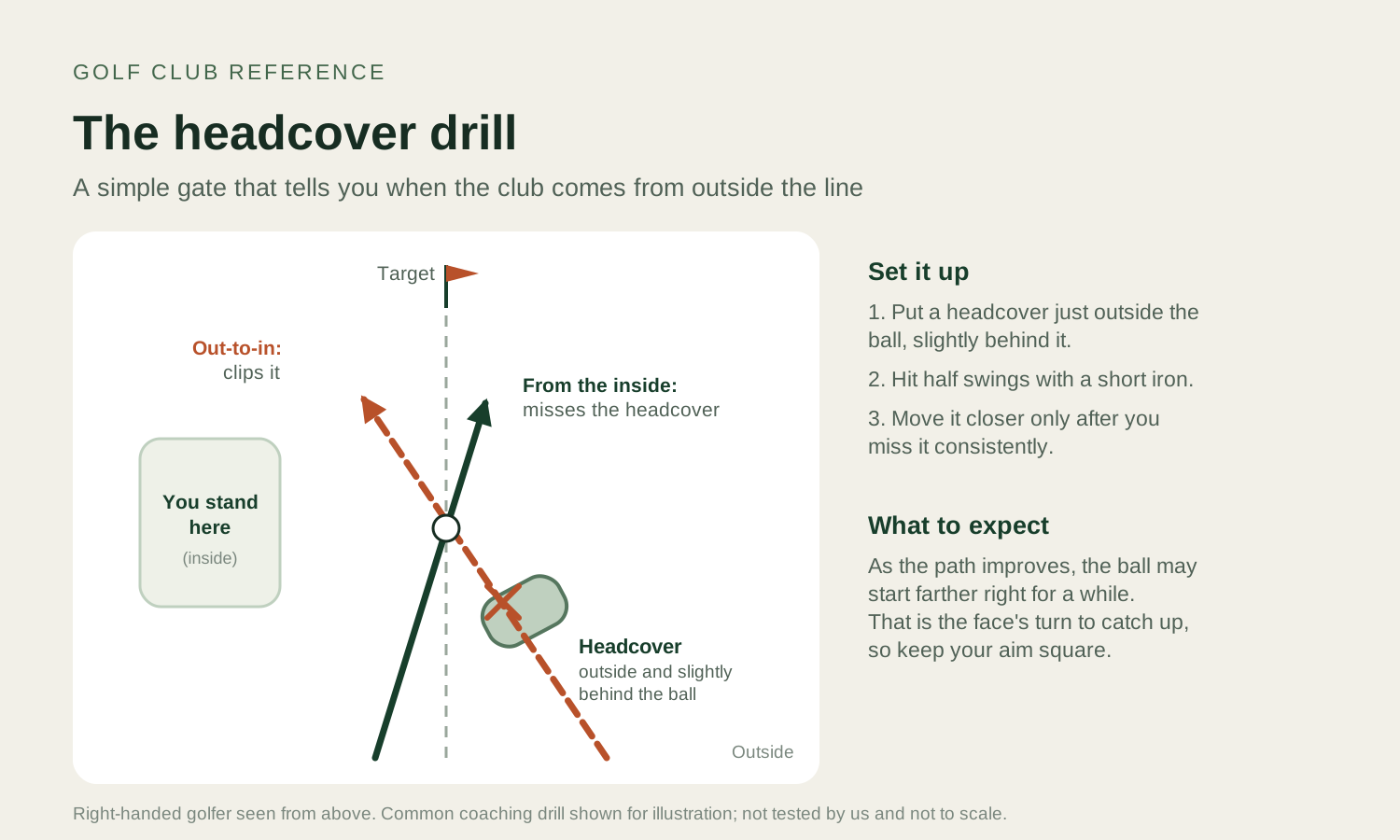
A common practice drill uses a headcover. Place it just outside and slightly behind the ball, on the far side of the target line. An out-to-in swing hits the headcover; a path from the inside misses it. Start with half swings and a short iron, and move the headcover closer only once you miss it consistently. We have not tested the drill ourselves. It is common in coaching, and a coach watching your swing can tell you whether it suits your pattern.
Expect the ball to start farther right as the path improves. If the face does not close at the same rate, a straight slice can briefly turn into a push slice. That usually means the path is changing and the face now needs work. Going back to aiming left would undo the path change.
Heel strikes make a driver slice worse
Strike location adds its own spin. Titleist's Learning Lab, citing the Titleist Performance Institute, describes gear effect: when a right-hander strikes the ball toward the heel, the head twists closed and the ball picks up clockwise spin that curves it left to right. A toe strike does the opposite.
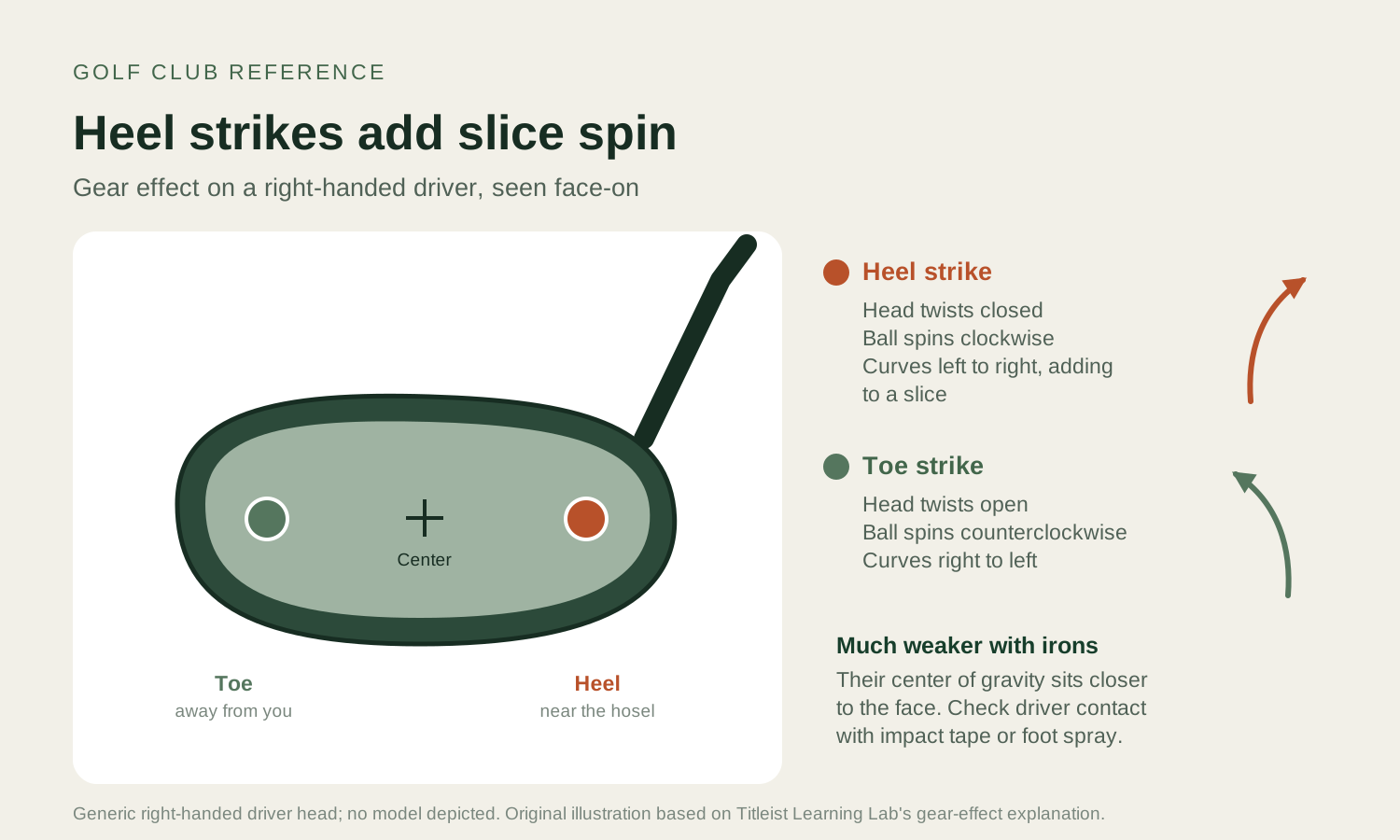
The effect is much stronger with drivers and fairway woods than with irons and wedges, whose center of gravity sits closer to the face. The curved face of a driver, called bulge and roll, accentuates it. So a golfer with a modest out-to-in path who also catches the driver near the heel can see more slice than the swing alone would produce.
Check your contact before you rebuild your swing. Spray foot powder or draw with a dry-erase marker on the driver face, or use impact tape, and hit ten balls. If most marks sit toward the heel, work on centered contact first.
Can equipment stop a slice?
Equipment can reduce the curve or add to it, but it cannot change the path you swing. PGA.com's first tip still applies: play clubs that fit you.
Lie angle
When an iron is too flat for the way you deliver it, the toe sits down at impact and a lofted face points to the right. When it is too upright, the face points left. A fitter checks this on a lie board with your swing, not from a chart. Our guide to lie angle explains the specification, and PING owners can read how the color dot changes the lie on a G-series iron.
Used clubs
A second-hand iron may have been bent, reshafted or shortened since it left the factory, so its lie and loft may no longer match the original chart. Our used-iron checklist covers what to measure before you blame your swing, and the loft guide explains how a measured loft compares with a factory figure.
Drivers
Many adjustable drivers have hosel settings or movable weights. Heel-weighted or draw settings can reduce how far the ball curves right, but they do not change the swing path. Each manufacturer's manual says what every setting does to loft, lie and face angle; check it rather than guessing.
Irons
Game-improvement irons are often marketed with more offset. Our article on reading AP2 offset figures shows how manufacturers publish that specification. No spec sheet can tell you how much a club will change your ball flight.
For a fitting or a lesson with a launch monitor, our US golf store directory lists shops by state.
A simple practice plan
- Record your pattern. Hit ten balls with a 7-iron and ten with a driver. Note where each one starts and which way it curves.
- Check contact. Mark the driver face and see whether heel strikes are adding to the problem.
- Fix the setup. Adjust your grip in a small step, aim square and confirm ball position.
- Work on the path with half swings. Use the headcover drill with a short iron before you move to the driver.
- Read the start line again. If balls now start right and curve right, give the face more attention; if they start left and curve right, the path still needs work.
- Get it checked. A PGA Professional with a launch monitor can measure face angle, path and face to path, and a fitter can check whether your clubs add to the curve.
Sources and limits
Reviewed October 8, 2026. Sources: TrackMan, “What is Face to Path?” (September 23, 2024) and “6 Trackman numbers all amateur golfers should know” (October 21, 2024); the Titleist Learning Lab pages on face angle, club path and gear effect; and Vinnie Manginelli, PGA, “Five Tips to Fix Your Slice” on PGA.com (June 30, 2022).
The curve figures are TrackMan's examples for tour carry distances with centered contact. The 75% and 85% start-direction figures are Titleist's summary of TrackMan data. We did not test any drill, swing change or club for this article, and nothing here predicts how much your own slice will change. The drills are common coaching practice; a qualified coach should confirm what suits your swing.