
Read the legend before the numbers
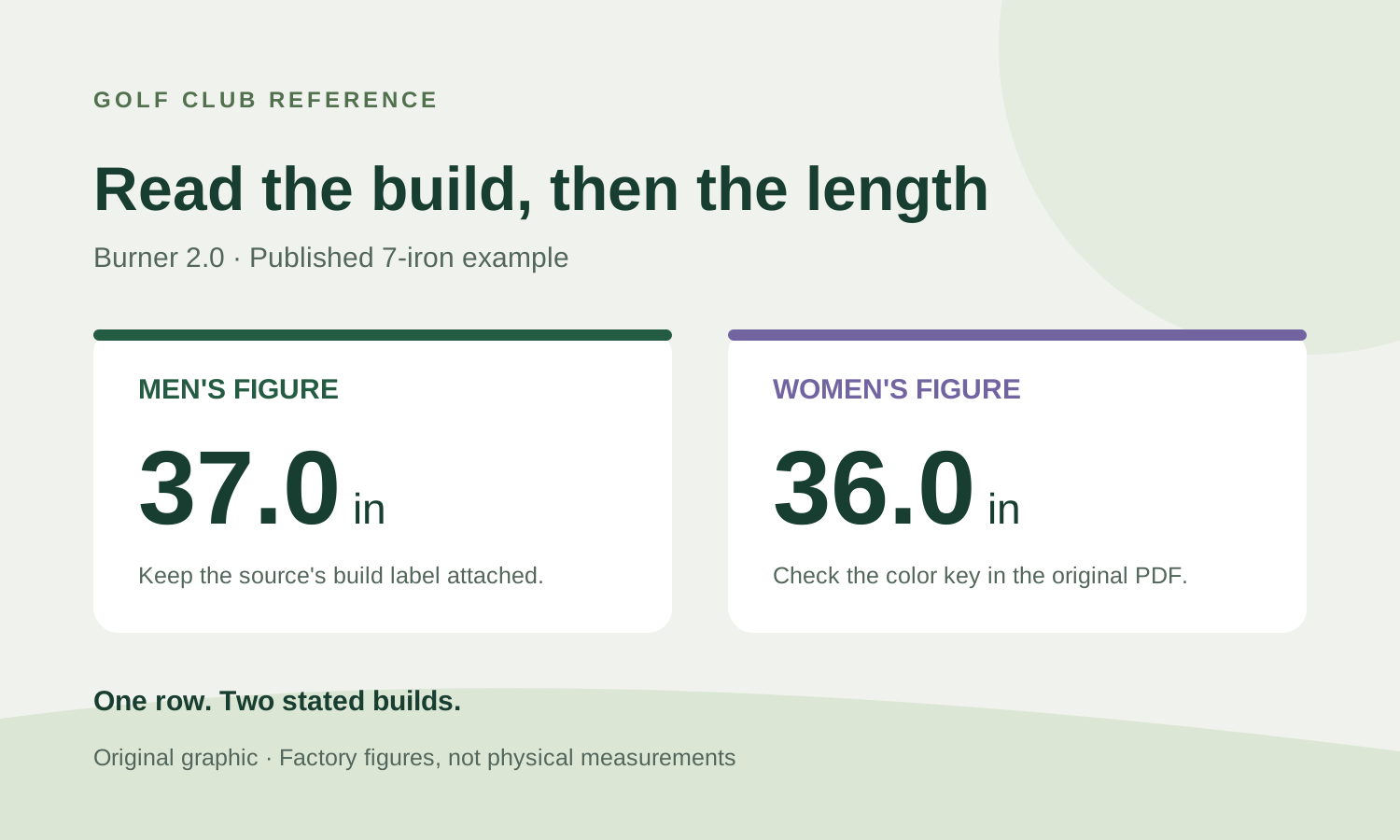
On the first PDF page of TaylorMade's Burner 2.0 catalog sheet, the legend marks graphite specifications in red and women's specifications in purple. In the 7-iron LENGTH cell, 37.0 is black and 36.0 is purple. That shorter entry is the published women's figure.
A text-only extraction can leave the two values side by side while losing those colors. Read the original page visually before assigning a build label. A pair of numbers in one cell should prompt a check of the legend, row and column headings.
The page is labelled as part of TaylorMade's 2011 iron catalog. That identifies the source edition used here. Keep the exact Burner 2.0 model name with it when looking up a set; the edition label establishes no manufacture date for an individual club.
Separate three selected length rows
These selected cells are transcribed into separate build columns so the original color distinction remains clear in plain text. All values are complete-club factory lengths in inches, retaining the printed decimal places.
| Club | Men's length (in) | Women's length (in) |
|---|---|---|
| 7-iron | 37.0 | 36.0 |
| PW | 35.5 | 34.5 |
| SW | 35.25 | 34.25 |
Each selected pair differs by 1 inch. That is arithmetic on published figures, with the build labels retained. It says nothing about which length suits a particular golfer or the present length of a used club.
Our Burner 2.0 reference chartuses the men's length figures and states that build assumption. Use the linked manufacturer page to inspect the women's annotations and the other build details in their original context.
Keep shaft material separate from length
A second number beside a length needs its own label. Calling it “the graphite length” solely because two numbers appear can turn a transcription into the wrong specification. Shaft material and the source's stated build are separate fields in a useful comparison record.
The original Burner iron sheetprovides a useful cross-check of that assumption. Its separate graphite and steel columns both print 37 inches for the 7-iron. The material labels alone therefore offer no rule that one published length must be longer than the other.
That earlier sheet belongs to the original Burner model. Keep each model's evidence with its own record, and leave an undocumented variant unresolved. Copying a build rule from another iron family defeats the purpose of checking a model-specific source.
Record the build alongside the value
Before comparing a seller's length with either factory chart, retain four pieces of information:
- The exact head model and club label, supported by photographs.
- The source URL, review date and the build label attached to its length.
- The shaft currently installed and any disclosed replacement or extension.
- The actual complete-club measurement, with its method, units and date.
Our length-measurement guideexplains how to document a repeatable setup, and the used-iron checklistcovers alteration questions. The source chart and a present-day measurement answer different parts of the inquiry.
If a listing gives a length without a build label or measuring method, ask for that missing context. Preserve the seller's observation separately from the factory value until the comparison is clear. The useful result is a traceable record of this club, rather than a bare number copied from the closest-looking row.
Sources and limits
Reviewed October 5, 2026: TaylorMade's Burner 2.0 2011 catalog pageand original Burner iron sheet. The length cells and color legend were checked visually as well as through text extraction. This article uses selected facts and its own graphic; neither manufacturer page nor its images are reproduced.
No clubs were inspected, measured or tested for this article. Factory figures supply a documented reference, with current length, condition and suitability left to evidence about the actual set.